Are Heated Towel Rails Worth It in New Zealand Bathrooms?
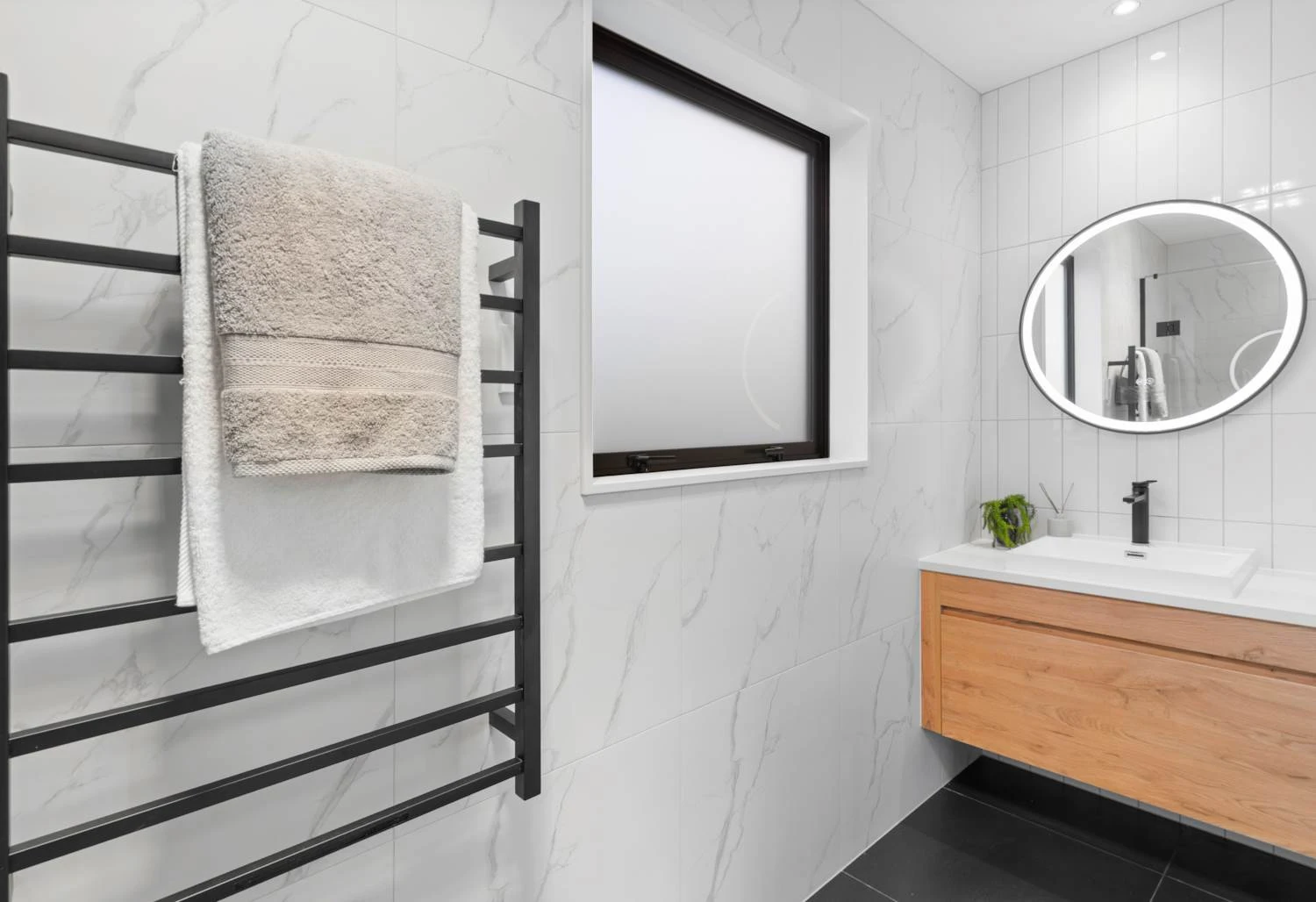
Heated towel rails are one of those bathroom upgrades that seem small until winter arrives. Then the difference becomes obvious: towels dry faster, the bathroom feels more comfortable, and the space looks more finished.
But are heated towel rails actually worth it in New Zealand bathrooms?
For many homes, the answer is yes — especially if the bathroom is cold, towels stay damp for hours, or the household wants a cleaner, more comfortable winter routine. A heated towel rail will not replace an extractor fan, fix mould by itself, or heat a whole bathroom like a proper bathroom heater. Its main job is simpler: to warm and dry towels more effectively.
In New Zealand homes where bathrooms often struggle with moisture, condensation and limited ventilation, that can still be a useful upgrade. BRANZ notes that moisture issues in homes are best managed through a combination of heating and ventilation, with bathroom extraction helping remove moist air from wet areas.
Quick answer: is a heated towel rail worth it?
Situation | Is it worth it? | Why |
|---|---|---|
Towels stay damp overnight | Yes | Helps towels dry faster between uses |
Bathroom feels cold in winter | Usually | Adds comfort, but does not replace room heating |
Small bathroom with poor airflow | Yes, with ventilation | Helps towels, but extractor fan still matters |
Family bathroom with many towels | Yes | Improves drying and organisation |
Rental bathroom | Maybe | Depends on budget, electrical setup and durability |
You want to stop ceiling mould | Not by itself | Ventilation and moisture control are more important |
You want a cleaner finished look | Yes | Adds structure, storage and design detail |
A heated towel rail is most valuable when it is part of a wider moisture-control setup: good ventilation, suitable bathroom heating, easy-clean surfaces and towels hung with enough space to dry.
Warm towels vs drying towels
Many people think a heated towel rail is mainly a luxury feature for warm towels. That is part of the appeal, but in everyday New Zealand bathrooms, the more practical benefit is drying.
A warm towel feels good after a shower, but a dry towel is more important over time.
Damp towels can:
smell musty
make the bathroom feel colder
contribute to a damp indoor environment
stay unpleasant between uses
crowd hooks, doors and rails
make a small bathroom feel messy
A heated towel rail gives each towel a defined place to hang and helps moisture leave the towel faster. It does not remove all moisture from the bathroom air, but it can reduce the problem of towels staying wet for too long.
What a heated towel rail can and cannot do
A heated towel rail can help with:
drying towels faster
warming towels before use
keeping towels off the floor
improving bathroom organisation
adding a finished design detail
reducing musty towel smell
supporting winter comfort
A heated towel rail cannot:
replace an extractor fan
remove steam from the room
fix leaks
stop mould on its own
dry a bathroom with poor ventilation
replace proper space heating
overcome serious dampness problems
This distinction matters. If a bathroom has mould, heavy condensation or wet windows every morning, a towel rail may improve towel comfort, but it should not be treated as the main moisture solution.
BRANZ identifies mechanical extraction as one of the most effective ways to manage moist air in wet areas, and EECA also recommends using bathroom and kitchen fans that are properly sized, cleaned and vented outside.
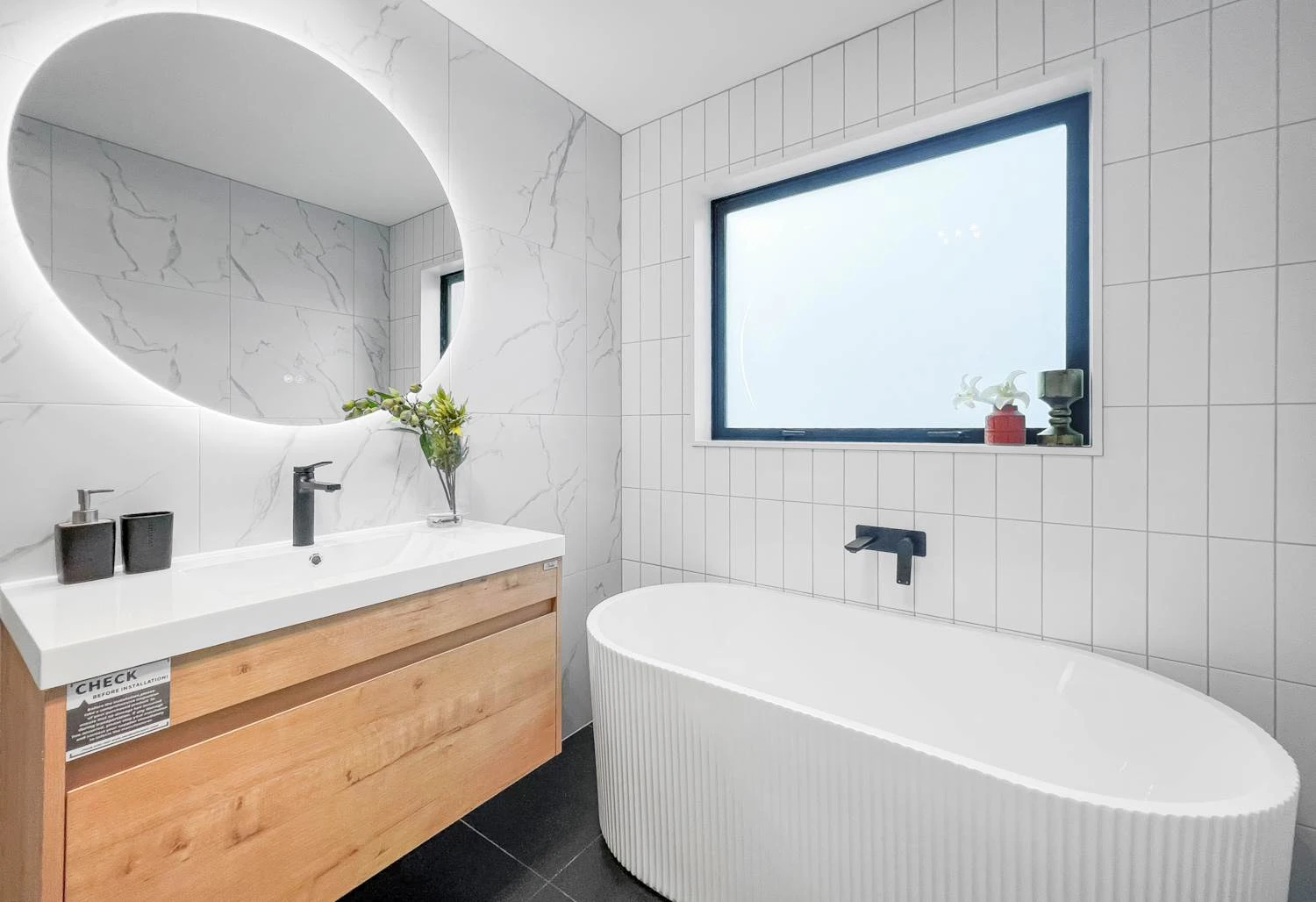
Do heated towel rails help reduce damp towels?
Yes. That is one of the main reasons to install one.
A heated towel rail works best when:
towels are spread out, not folded thickly
each towel has enough contact with the rail
the rail is sized for the number of towels
the bathroom has airflow
the extractor fan is used after showers
the rail is not overloaded
If four towels are bunched tightly on a small rail, they may still stay damp. If one or two towels are spread across a suitable rail, drying performance is much better.
For a busy family bathroom, size and layout matter more than appearance alone.
Horizontal vs vertical heated towel rails
One of the biggest choices is whether to install a horizontal or vertical towel rail.
Horizontal heated towel rails
Horizontal rails are the most familiar style. They usually have multiple bars across the wall and are good for hanging bath towels flat.
Best for:
family bathrooms
larger walls
multiple towels
classic bathroom layouts
people who want maximum towel contact
Advantages:
practical for full-size towels
easy to understand
good drying contact
available in many finishes and sizes
Trade-offs:
needs more wall width
may look bulky in small bathrooms
can clash with vanity, shower door or toilet clearance
Vertical heated towel rails
Vertical heated towel rails are becoming popular in smaller bathrooms because they use height rather than width.
Best for:
compact bathrooms
narrow wall spaces
ensuites
modern bathroom designs
bathrooms with limited horizontal wall area
Advantages:
saves wall width
looks modern
useful beside showers or vanities
can fit where a traditional rail cannot
Trade-offs:
towel contact area may be different
may suit fewer towels depending on design
placement height matters
not every layout works with vertical hanging
The best choice depends on the wall space available and how many towels need to dry each day.
Small bathroom placement: where should a heated towel rail go?
In a small bathroom, towel rail placement needs careful planning.
A good position should:
be close enough to the shower or bath to reach easily
not block the shower door
not crowd the toilet
not interfere with vanity drawers
have enough wall structure for fixing
allow towels to hang without touching the floor
be away from direct water spray unless designed and installed for the correct zone
work with electrical safety requirements
Common placement options include:
beside the shower
opposite the vanity
behind the bathroom door
on a narrow wall near the bath
between vanity and shower where clearance allows
on a tall narrow wall for vertical rails
Avoid placing the rail somewhere that looks good in a render but becomes awkward every day. A towel rail that blocks movement or catches on the door will quickly become annoying.
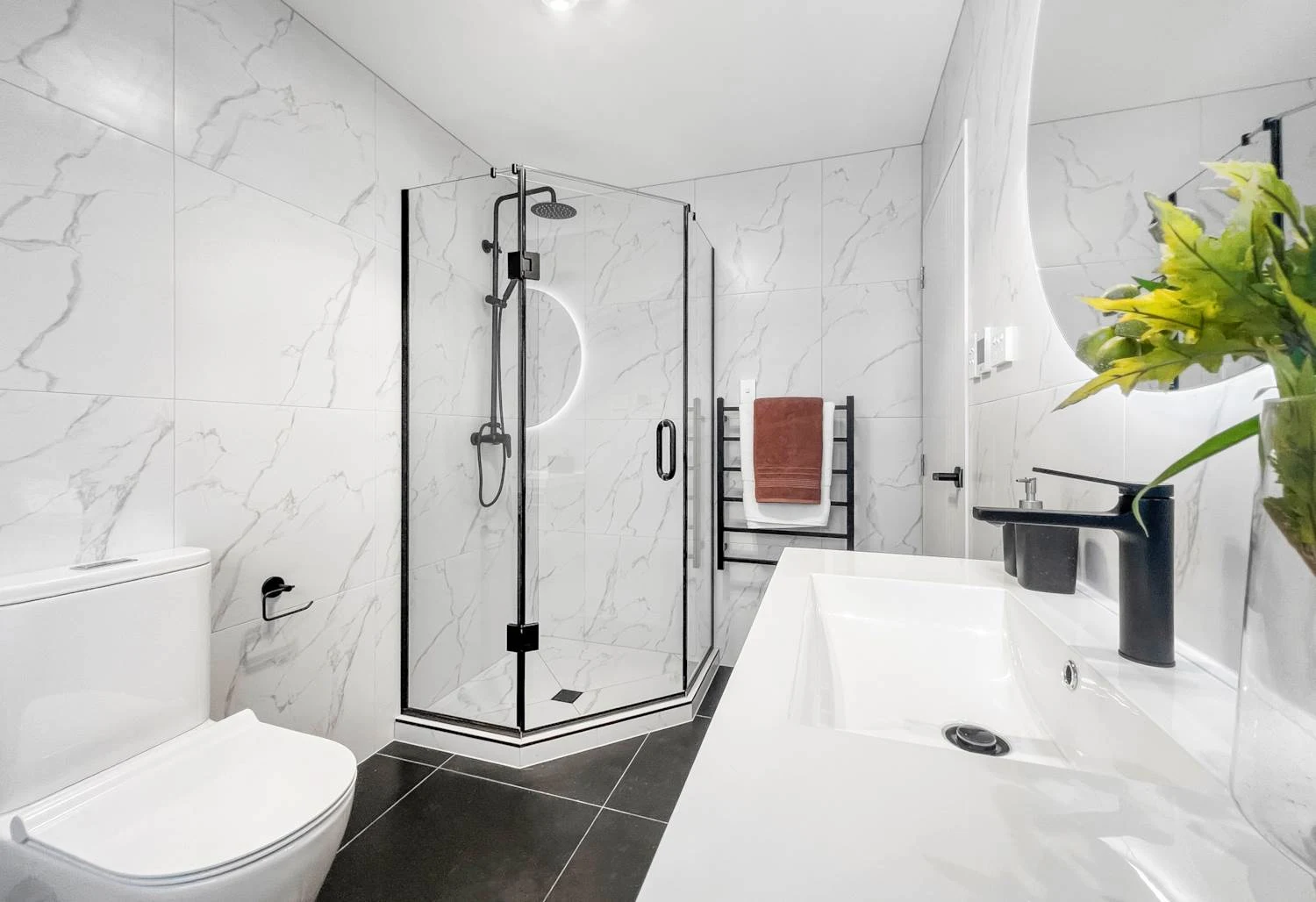
Hardwired vs plug-in heated towel rails
Heated towel rails generally fall into two practical installation categories: hardwired and plug-in.
Hardwired heated towel rails
A hardwired towel rail is connected into the electrical system, usually with wiring concealed in the wall.
Best for:
new renovations
cleaner design
long-term homes
bathrooms where visible cords are unwanted
premium or minimalist finishes
Advantages:
cleaner look
no visible plug or cord
easier to integrate with timers or switches
more suitable for a finished renovation
Trade-offs:
needs an electrician
more planning required
less flexible to move later
Plug-in heated towel rails
A plug-in rail connects to a power outlet.
Best for:
simple upgrades
some rental or temporary situations
lower-cost installations
spaces where hardwiring is not practical
Advantages:
simpler to understand
may be easier to replace
less wall work
Trade-offs:
visible cord
power outlet placement matters
bathroom electrical zones may limit where it can go
less seamless appearance
In bathrooms, electrical safety is important. WorkSafe advises that electrical equipment should be used according to the manufacturer’s instructions and must be suitable for New Zealand voltage and use. WorkSafe also advises calling a licensed electrician if there is any uncertainty about electrical work.
For a renovation, a hardwired towel rail installed by a licensed electrician is usually the cleaner and more professional option.
Bathroom electrical safety and zones
A bathroom is not like a bedroom or hallway. Water, steam and electricity share the same space, so product selection and installation location matter.
Electrical equipment in bathrooms must be suitable for the location where it is installed. The New Zealand Electrical Code of Practice includes restrictions around socket outlets, switches, fittings and appliances in bathroom zones, with different requirements depending on distance from water sources.
For homeowners, the practical takeaway is simple:
do not install a towel rail randomly beside a shower without checking the zone
check the product’s IP rating and installation instructions
use a licensed electrician for hardwired installation
avoid visible cords near wet areas
confirm switch or timer placement
ask the electrician before buying if the location is tight
A good-looking towel rail still needs to be installed safely.
Do heated towel rails use a lot of electricity?
Running cost depends on the rail size, wattage, electricity rate and how long it runs.
The important point is that a towel rail does not need to be on all day in every home. A timer can reduce unnecessary use by running the rail when it is actually needed, such as morning and evening shower times.
EECA includes heated towel rails among appliances that can be switched off when they are not needed as part of household energy-saving advice.
Practical tips:
use a timer
avoid running it 24/7 unless necessary
size the rail to the towels you actually use
do not overload it
combine it with ventilation so towels dry more efficiently
turn it off during long periods away from home
A heated towel rail is usually a comfort and convenience upgrade, not a major bathroom heater. Use it intentionally.
Matching finishes: chrome, matte black, gunmetal and gold
A heated towel rail is also a visible design feature. The finish should match the rest of the bathroom.
Chrome
Chrome is the safest and most versatile choice. It works with most bathrooms and is easy to coordinate with standard tapware and shower fittings.
Best for:
classic bathrooms
rental properties
simple renovations
bright white bathrooms
mixed existing finishes
Matte black
Matte black gives strong contrast and works well in modern bathrooms.
Best for:
white tiles
marble-effect tiles
black shower frames
black tapware
contemporary bathrooms
Be careful not to overuse black in a small bathroom. Repeat it in a few details, such as tapware, shower frame or accessories.
Gunmetal grey
Gunmetal is softer than black but more modern than chrome. It works well with grey tiles, concrete-look finishes and minimalist bathrooms.
Best for:
modern renovations
darker palettes
brushed or satin finishes
bathrooms with gunmetal tapware
Brushed gold
Brushed gold adds warmth and a more decorative feel.
Best for:
cream bathrooms
marble-look tiles
warm neutral palettes
premium vanity spaces
matching gold tapware and accessories
The key is consistency. A towel rail should look like part of the design, not an afterthought.
How to choose the right size
Before buying, consider:
how many towels need to hang daily
whether towels are bath sheets or smaller towels
wall width and height
nearby doors and drawers
distance from shower or bath
electrical connection location
finish match
whether you want horizontal or vertical style
whether it needs to work in a family bathroom, ensuite or laundry
For a couple’s ensuite, a compact rail may be enough.
For a family bathroom, a larger multi-bar rail may be more practical.
For a small bathroom, a vertical rail may save wall width.
Best use cases for heated towel rails
A heated towel rail is especially useful in:
Small ensuites
It keeps towels organised without needing bulky hooks or freestanding rails.
Family bathrooms
It helps manage multiple towels and reduces damp towel clutter.
Winter-prone bathrooms
It adds comfort during colder months, especially when paired with ventilation.
Modern renovations
It completes the bathroom visually and can match tapware, shower frames and accessories.
Laundry-bathroom combinations
It can help dry hand towels or small items where moisture tends to build up.
Common mistakes to avoid
Expecting it to fix mould
A heated towel rail helps towels dry, but mould prevention still needs ventilation, heating and moisture control.
Installing it too far from the shower
If the towel is inconvenient to reach, the rail will not be used properly.
Choosing the wrong size
A small rail overloaded with towels will not dry effectively.
Ignoring door and drawer clearance
Check whether vanity drawers, bathroom doors and shower doors can still open.
Mixing too many finishes
If tapware is chrome, shower frame is black and towel rail is gold, the bathroom can feel visually messy.
Forgetting electrical planning
Hardwired towel rails should be planned before wall linings and tiles are finished.
Simple decision guide
Your bathroom situation | Best starting point |
|---|---|
Small ensuite | Vertical or compact horizontal rail |
Family bathroom | Larger horizontal multi-bar rail |
Modern black tapware | Matte black heated towel rail |
Grey or concrete-look bathroom | Gunmetal grey rail |
Warm luxury bathroom | Brushed gold rail |
Simple renovation | Chrome horizontal rail |
Limited wall width | Vertical rail |
Need cleaner finish | Hardwired rail |
Temporary or simple upgrade | Plug-in option, if safe and suitable |
Damp towels every morning | Heated rail + extractor fan |
FAQ
Are heated towel rails worth it in New Zealand bathrooms?
Yes, for many homes. They are especially useful in winter, small bathrooms and bathrooms where towels stay damp for too long. They improve comfort and towel drying, but they are not a substitute for ventilation.
Do heated towel rails help reduce damp towels?
Yes. They help towels dry faster when towels are spread properly and the rail is not overloaded. They work best with good bathroom airflow.
Will a heated towel rail stop mould?
Not by itself. Mould is usually a moisture-control issue. A heated towel rail can reduce damp towels, but extractor fans, heating, insulation and drying habits are more important for mould prevention.
Should I choose a horizontal or vertical heated towel rail?
Choose horizontal if you have wall width and need to dry larger towels. Choose vertical if your bathroom is small, narrow or modern in style.
Is a hardwired towel rail better than plug-in?
For a finished bathroom renovation, hardwired usually looks cleaner and more professional. Plug-in can be useful for simpler situations, but outlet position and bathroom safety zones matter.
Do I need an electrician for a heated towel rail?
For hardwired installation, use a licensed electrician. Bathroom electrical work must be planned carefully because of water, steam and safety zones.
Should a heated towel rail run all day?
Not always. A timer can help reduce unnecessary electricity use by running it around shower times. EECA recommends switching off appliances such as heated towel rails when they are not needed.
What finish is best?
Chrome is the most versatile. Matte black is strong and modern. Gunmetal grey is contemporary and softer than black. Brushed gold adds warmth and a luxury feel. Match the finish to your tapware and bathroom accessories.
Final thoughts
A heated towel rail is worth it when your bathroom needs better towel drying, more organisation and a little extra winter comfort.
It will not solve every dampness problem, and it should not be treated as a replacement for an extractor fan or bathroom heater. But when installed in the right position, sized properly and used with good ventilation, it can make a bathroom feel cleaner, warmer and more practical every day.
For New Zealand bathrooms, the smartest approach is to think of a heated towel rail as part of the full winter comfort system: extract moisture, warm the space, dry towels properly, and choose finishes that make the bathroom easier to maintain.