
How to Match Your TV Unit with the Rest of Your Living Room Furniture
A TV unit should do more than hold your television. It should complement your sofa, coffee table, flooring and decor while providing practical storage for everyday entertainment equipment. Discover how to coordinate colours, materials, proportions and styling to create a more balanced and functional living room.
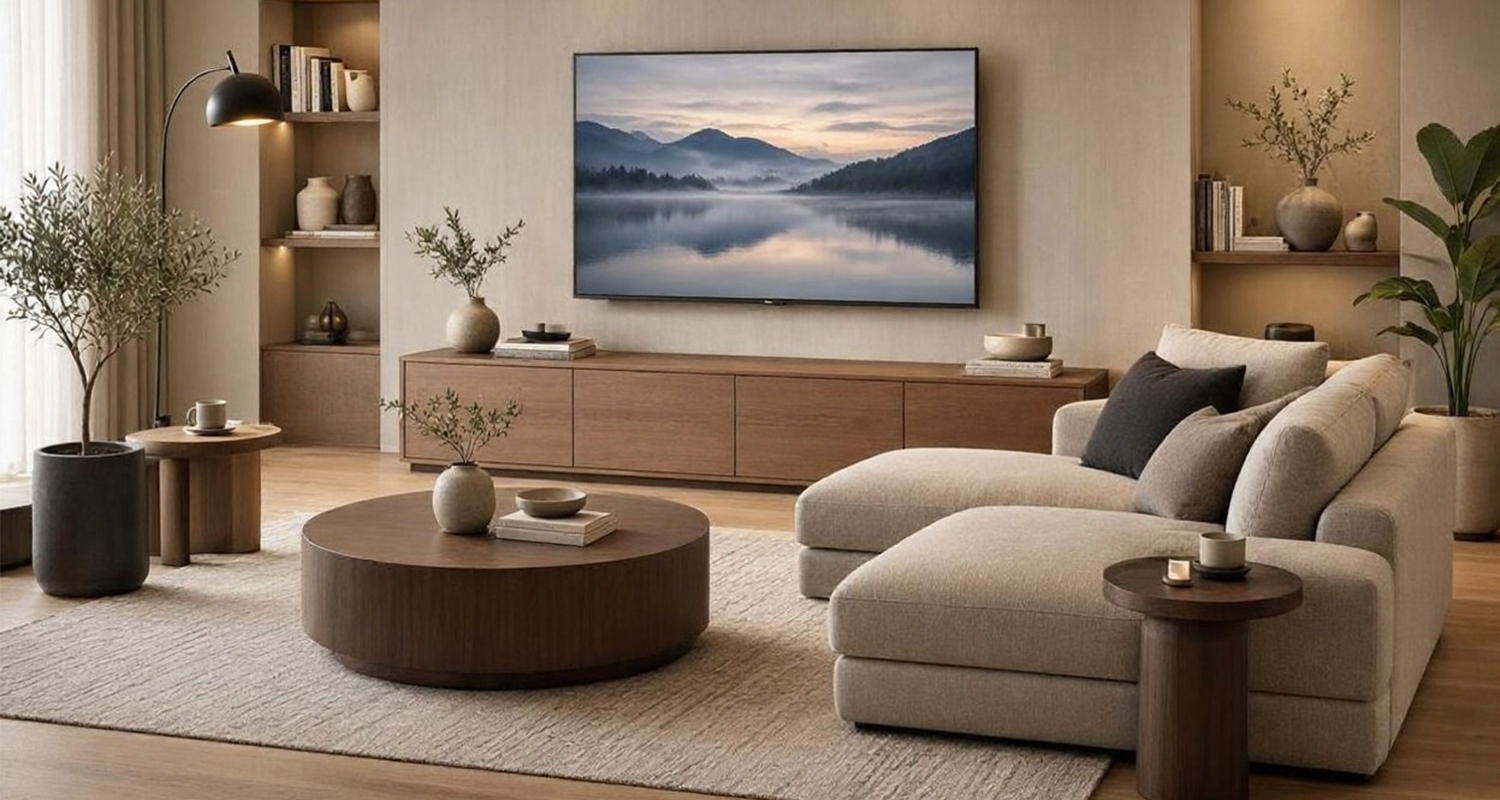
A television is often one of the largest features in a living room, which means the furniture around it has a noticeable influence on how the entire space feels. The TV unit sits at the centre of this arrangement, connecting the television with the sofa, coffee table, rug, flooring and surrounding decor.
Choosing the right one involves more than finding a cabinet in a matching colour. Its proportions, materials, storage layout and overall style should work with the furniture you already own.
A well-chosen TV unit can make a living room feel more balanced and organised without requiring every piece of furniture to come from the same collection. The key is to understand how the different elements relate to one another before deciding what to buy.
Read the Room Before Choosing a TV Unit
Before browsing furniture, take a step back and look at your living room as a whole.
Start with the largest elements: the sofa, flooring, rug, coffee table and wall colour. These pieces establish the room's visual direction and usually have a greater influence on its overall appearance than smaller decorative accessories.
For example, a living room with a cream sofa, natural timber flooring and a textured rug may already have a warm, relaxed character. A natural timber or soft white TV unit could complement that atmosphere. By contrast, a room with charcoal upholstery, black accents and cooler flooring may suit a darker or more contemporary design.
Next, consider the feeling you want to create. Do you prefer a relaxed family space, a minimalist interior, a warm Scandinavian look or something more polished and contemporary?
This does not mean every piece needs to follow one strict design style. A modern TV unit can sit comfortably beside more traditional furniture if there is a shared detail connecting them, such as a similar timber tone, simple silhouette or repeated metal finish.
It is also worth considering how the room is used. A family living room with children, pets and frequent visitors may need a different arrangement from a quieter space used mainly for reading and watching television.
The existing furniture gives you a starting point. Rather than choosing a TV unit in isolation, identify two or three visual features you want to carry through the room.
Get the Scale and Position Right
Even a beautifully designed TV unit can look out of place if its proportions do not suit the television and surrounding furniture.
Start with the screen itself. Measure the television's actual width rather than relying only on its advertised diagonal screen size. Screen size is measured diagonally, so two televisions with similar advertised sizes may have different physical dimensions depending on their design.
As a general visual guide, a TV unit is often wider than the television sitting above it. This creates a more grounded appearance and gives the screen some visual breathing room. However, the exact proportions should also account for the television's stand, any soundbar and the available wall space.
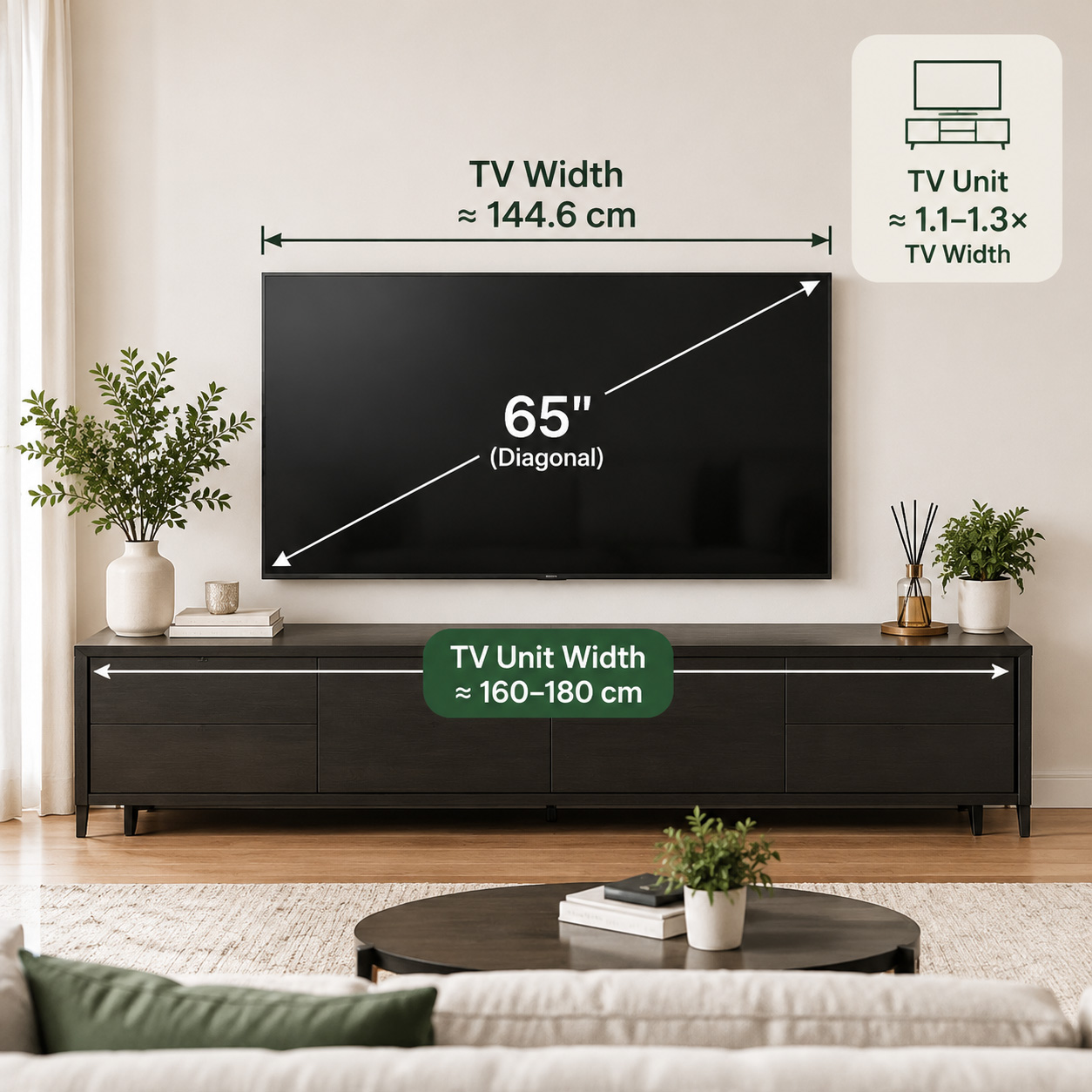
The unit should also relate to the sofa and coffee table. A very narrow cabinet beneath a large television can look undersized, while an oversized piece may dominate a compact living room. Consider the width of the furniture around it and leave enough room for comfortable movement.
Think about viewing distance and height
The distance between your sofa and television affects how comfortable the screen feels during everyday viewing. A large television may be suitable for a spacious room but overwhelming when the main seating is close to the screen.
TV height matters too. When seated, the screen should generally be positioned so that your eyes fall around the centre of the display, or close to it. The ideal arrangement depends on screen size, seating height and viewing preferences.
If you are using a tabletop television stand, check the combined height of the TV and cabinet before purchasing. If the television will be wall-mounted, think about how the unit below it will relate to the screen rather than choosing its height independently.
Do not overlook depth
A cabinet that looks slim in a product photograph may not have enough depth for your equipment.
Measure the television's feet or stand, soundbar and other devices. Remember to allow room for plugs and cables behind the unit, especially if it will sit close to a wall.
Getting these measurements right before shopping helps prevent a common problem: buying a unit that looks suitable but cannot comfortably accommodate the equipment it is meant to support.
Create a Consistent Look with Colour and Materials
A coordinated living room does not require matching furniture sets. In fact, using exactly the same colour and finish everywhere can sometimes make a space feel flat.
A more natural approach is to create connections between different pieces through complementary colours, materials and textures.
Work with the colours already in the room
Look at the dominant colours in your sofa, rug, curtains, flooring and walls.
If the room has a neutral palette, a timber TV unit can introduce warmth and natural texture. Natural oak, for example, can work well with cream upholstery, beige fabrics and soft white walls.
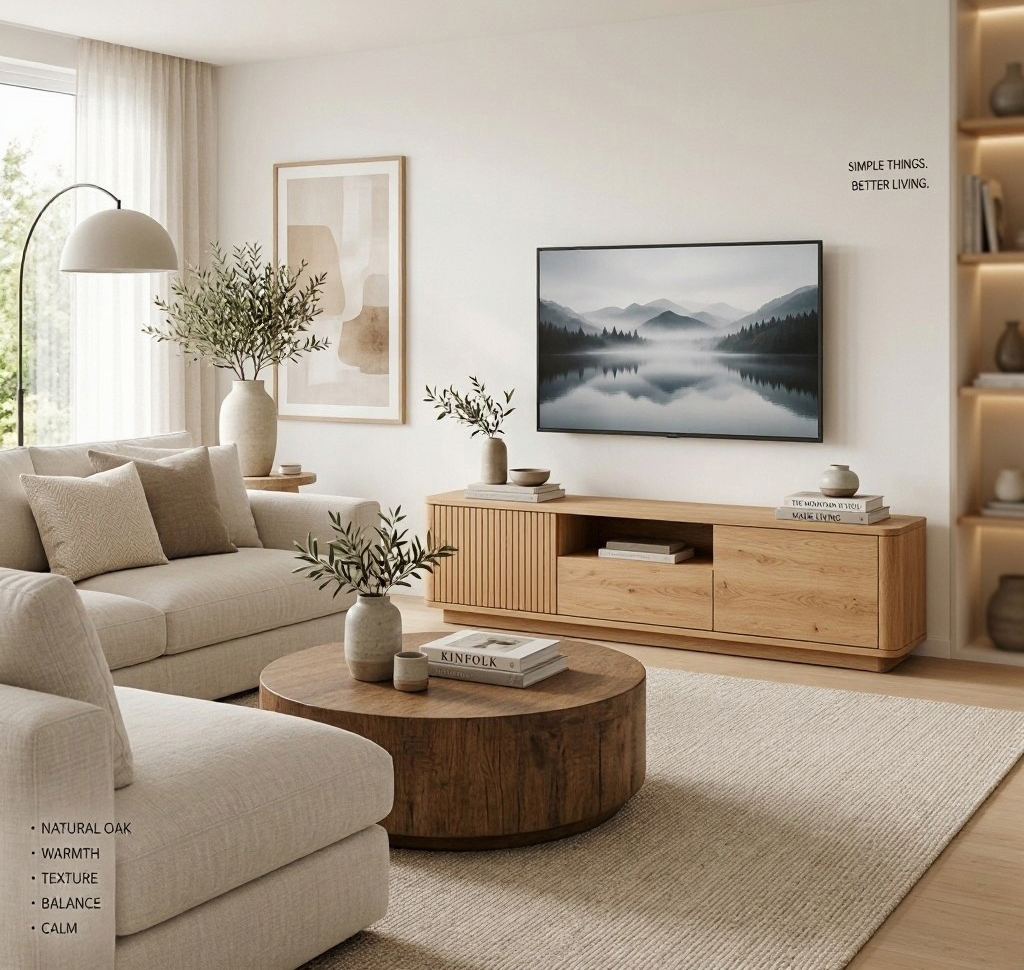
If the sofa or rug already has a strong colour or pattern, a simpler cabinet in white, black, grey or natural timber can help balance the arrangement.
You can also use the TV unit to introduce contrast. A darker cabinet against a pale wall can create a clear focal point, while a light-coloured unit can soften a room with darker furniture.
The important detail is to repeat at least one colour elsewhere. A black TV unit, for example, may feel more connected to the room when the same finish appears in a floor lamp, picture frame or coffee table legs.
Pay attention to timber undertones
Timber finishes deserve particular attention because different wood tones can look noticeably different beside one another.
Some timber finishes have warm golden or reddish undertones, while others appear cooler, greyer or more neutral. Two pieces labelled as natural timber may therefore look quite different when placed side by side.
You do not need to match every wood finish exactly. Instead, try to keep their underlying tones compatible.
Warm timber generally works comfortably with creamy whites, beige, terracotta and other earthy colours. Cooler timber finishes can complement grey upholstery, black accents and cooler white interiors.
If you are combining several wood tones, avoid introducing too many competing finishes in one small area. A consistent undertone or a repeated material can help the arrangement feel intentional.
Mix materials without creating visual clutter
A timber cabinet beside a fabric sofa can create a relaxed contrast. Glass, metal and textured finishes can also add variety without making the space feel disconnected.
For example, a TV unit with black metal legs may relate naturally to a floor lamp or coffee table with a similar frame. A timber cabinet can bring warmth to a room with glass surfaces and smooth finishes.
A useful starting point is to repeat important materials at least twice. This could mean timber in both the TV unit and coffee table, or black metal in the cabinet hardware and lighting.
The goal is not to restrict your choices but to give the eye a few familiar details to follow.
Balance the Visual Weight of Your Furniture
Colour and material are only part of how furniture works together. Its visual weight also influences whether a living room feels balanced.
A large, dark cabinet with solid doors usually appears heavier than a slim unit with open legs, even if their physical dimensions are similar.
This matters particularly in smaller Australian living rooms, where a combination of bulky furniture and limited floor space can make the area feel crowded.
If your room already contains a large sofa, substantial coffee table or dark flooring, a lighter TV unit may help create breathing room. Designs with raised legs or open bases allow more of the floor to remain visible, which can make the space feel less enclosed.
On the other hand, a room with pale walls, lightweight furniture and few strong visual features may benefit from a deeper-toned cabinet. It can anchor the television area and give the room a more defined focal point.
Consider the surrounding wall
The TV unit should also relate to the wall behind it.
A long, low cabinet may suit a wide wall with a wall-mounted television, while a more compact unit may work better in a smaller apartment or a room with several doorways.
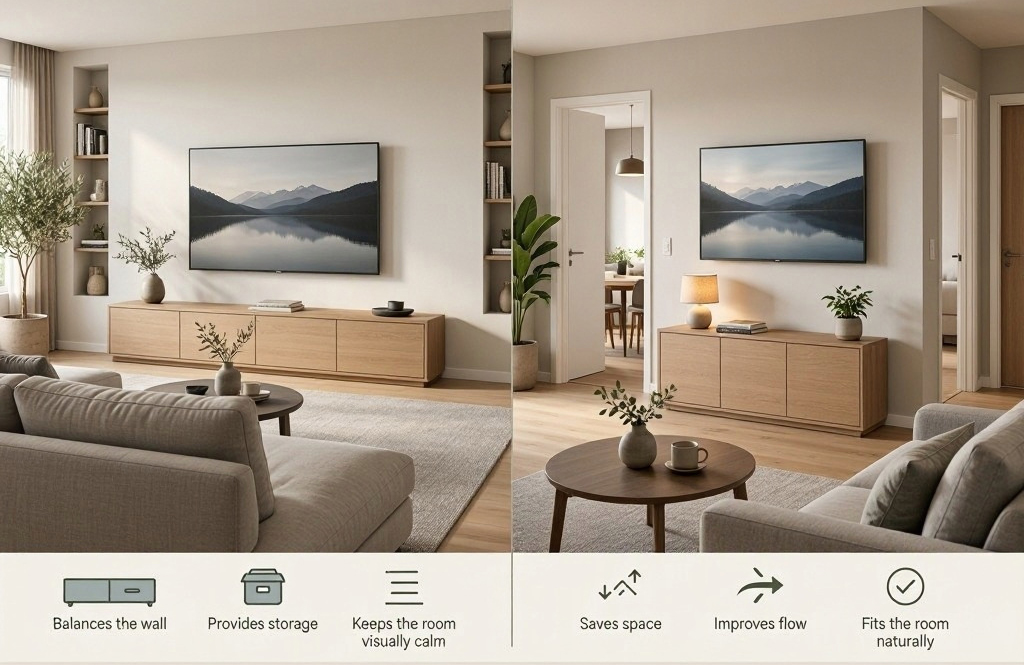
Think about what sits beside the television. A large artwork, tall bookcase or substantial floor lamp can change how much visual space the cabinet needs.
Avoid filling every available section of the wall. Some empty space around the furniture helps individual pieces stand out and prevents the television area from feeling overcrowded.
A balanced arrangement is not necessarily symmetrical. What matters is that the overall combination of height, width, colour and furniture placement feels comfortable.
Match Storage to Your Entertainment Setup
The best-looking TV unit may not be the most useful if it cannot accommodate your everyday equipment.
Before choosing a design, list everything you expect to keep in or around it. This might include:
Streaming devices and media players
Gaming consoles and controllers
Soundbars and speakers
Routers and other network equipment
Remotes, chargers and spare cables
DVDs, books or small decorative items
Once you know what needs to fit, decide whether open shelves, closed compartments or a combination of both will suit your household.
Open shelves or closed storage?
Open shelving makes devices easier to reach and can help equipment receive airflow. It also provides space for books, plants and carefully selected decorative pieces.
However, exposed equipment and loose cables can make the area look busy. If you prefer a minimal living room, you may find that too many open compartments create visual clutter.
Closed storage provides a cleaner appearance by concealing accessories and everyday items. Drawers are useful for remotes, controllers and smaller belongings, while cupboards can accommodate larger equipment.
A combination of open and closed storage often offers a practical middle ground. Frequently used devices can remain accessible, while less attractive accessories are kept out of sight.
Measure equipment before buying
Do not assume that a device will fit simply because it looks small enough in a photograph.
Measure its width, height and depth, including any connections or cables that extend from the back. Allow additional room for ventilation and access when arranging electronics inside a compartment.
If you expect to upgrade your television or sound system in the future, a little extra capacity may also be useful.
Adjustable shelves can provide flexibility when equipment changes, while rear cable openings make it easier to organise the setup without leaving wires stretched across the floor.
Keep Cables, Ventilation and Safety in Mind
A carefully coordinated living room can quickly look untidy when cables are visible behind the television.
Cable management is therefore part of choosing the right furniture, not simply a finishing task.
Look for a unit with rear cable openings, cut-out sections or enough clearance behind the back panel to route wires neatly towards the power outlet.
Group related cables with suitable clips or ties and keep them away from walking paths. If the television is wall-mounted, plan how its power and connection cables will reach the equipment below without creating an untidy arrangement.
Ventilation is equally important. Streaming devices, gaming consoles, routers and other electronics can produce heat during use. Avoid tightly packing equipment into enclosed compartments without suitable airflow.
Follow the equipment manufacturer's ventilation and clearance recommendations. A cabinet that looks neat but traps heat may not be a suitable long-term storage solution.
Check weight capacity and stability
The unit must be suitable for the television's weight and the way it will be installed.
Check the manufacturer's stated weight capacity and confirm that the television's base can sit securely on the available surface. Avoid placing a large screen on a narrow or unstable cabinet simply because the dimensions appear close enough.
For households with young children, pets or frequent activity around the television area, stability deserves particular attention.
Secure furniture to the wall using an appropriate anti-tip device, following the manufacturer's instructions. Keep heavier items on lower shelves where possible and avoid placing objects that children may climb on near the cabinet.
If you rent, check with your landlord or property manager before drilling into walls. You may need to discuss suitable anchoring arrangements.
A practical television area should support everyday use while reducing unnecessary safety risks.
Use Lighting and Styling to Complete the Look
Once the main furniture is in place, lighting and decorative details can help connect the television area with the rest of the living room.
A floor lamp beside the sofa, a table lamp on a nearby sideboard or soft indirect lighting can make the room feel more comfortable in the evening.
Avoid placing a bright light directly opposite the television, as reflections and glare can make viewing less comfortable. If you enjoy watching films in a darker room, softer ambient lighting may be more suitable than relying on a single bright overhead light.
Layered lighting gives you more flexibility. Use general lighting for everyday activities, then add softer lamps for reading, relaxing or watching television.
Style the unit without overcrowding it
The surface of a TV unit is an opportunity to introduce personality, but it does not need to hold every decorative item you own.
A few carefully chosen pieces are often more effective than a crowded display. Consider a small plant, ceramic vase, a short stack of books or a framed photograph.
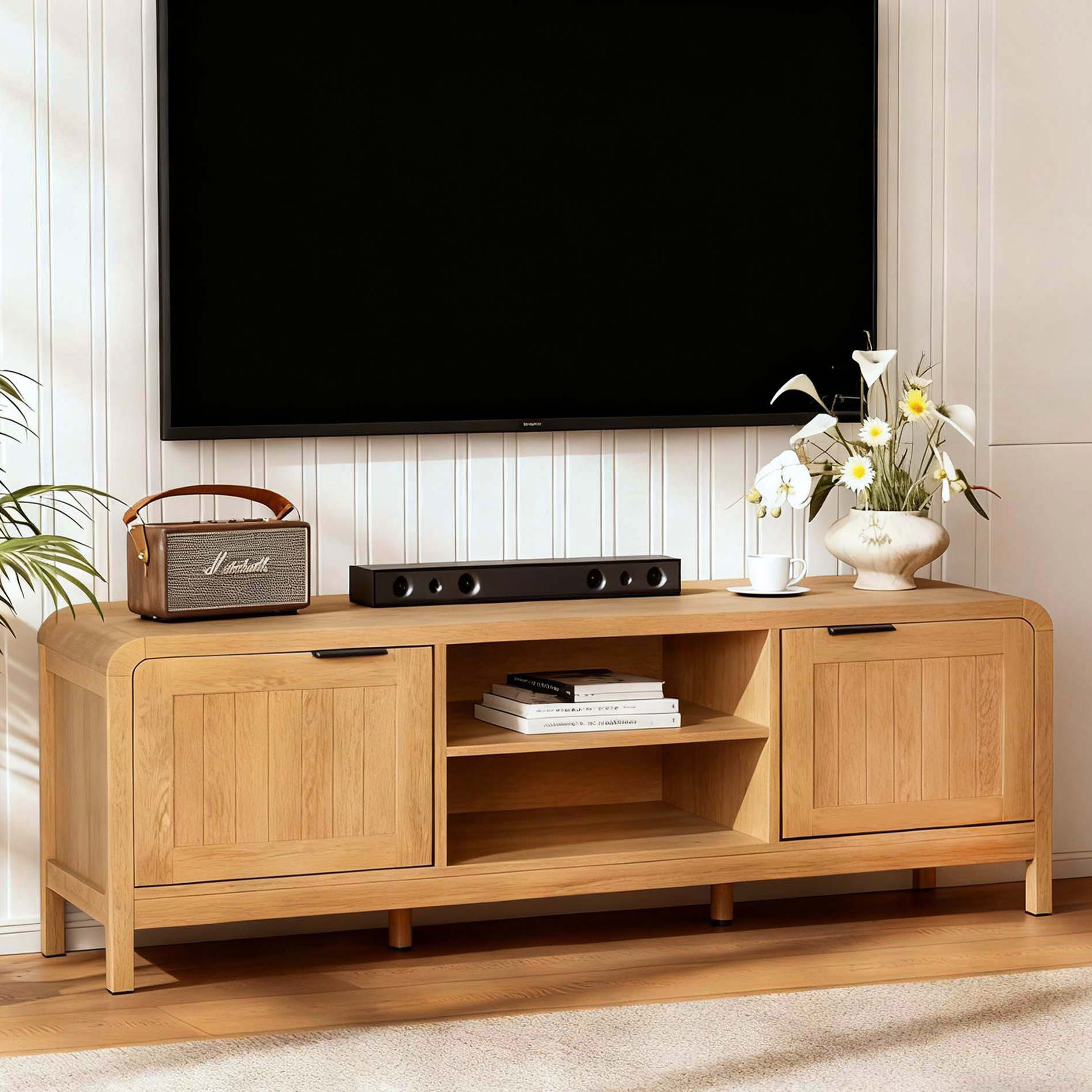
Choose accessories that repeat colours and textures already present in the room.
The LivaraHome ARLO tv unit features a natural oak finish and a clean, modern design that works effortlessly with a variety of living room styles. Its warm timber tones can complement neutral interiors, pairing beautifully with cream upholstery, beige fabrics and soft white walls. For a more cohesive look, choose accessories in similar tones to your rug or other timber furniture, such as a coffee table, to create visual continuity throughout the room.
Be mindful of the television itself. A large screen already occupies considerable visual space, so a busy arrangement around it may compete for attention.
If your television is wall-mounted, the unit below can provide additional storage and a place for selected accessories. Leave enough space around the screen to keep the overall arrangement comfortable rather than forcing decorative symmetry.
A little negative space often makes the entire area feel more considered.
A Practical Checklist Before You Buy
Before choosing a new TV unit, work through these questions:
Size and placement
Is the unit wide and deep enough for your television and its stand?
Does its height suit your seating and viewing position?
Will it fit comfortably without obstructing walkways, doors or nearby furniture?
Style and coordination
Does its colour work with the sofa, rug, flooring and wall?
Are the timber undertones and metal finishes compatible with existing furniture?
Does its visual weight suit the size and atmosphere of the room?
Everyday function
Is there enough room for your gaming console, soundbar and other devices?
Does the storage layout suit the way your household uses the space?
Are cables easy to organise, and can electronics receive adequate ventilation?
Safety and durability
Can the cabinet safely support the television's weight?
Is the furniture stable and suitable for the household?
Does it include appropriate provisions for anti-tip anchoring where needed?
Measuring the space and listing your equipment before shopping can save time and help you avoid choosing a cabinet based on appearance alone.
A TV Unit That Makes the Whole Room Work
A well-matched TV unit does not need to look identical to the rest of your living room furniture. It simply needs to share enough visual connections to feel like part of the same space.
Pay attention to proportions, complementary colours, compatible materials and the visual weight of nearby furniture. Then consider the practical details: equipment dimensions, storage, cable access, ventilation and stability.
When these elements work together, the television area feels more organised and the rest of the living room becomes easier to bring together.
The best choice is not necessarily the most decorative or expensive design. It is the one that suits your space, supports your everyday routine and makes the room feel more complete.