
Why One Ceiling Light Is Never Enough: Understanding Layered Lighting at Home
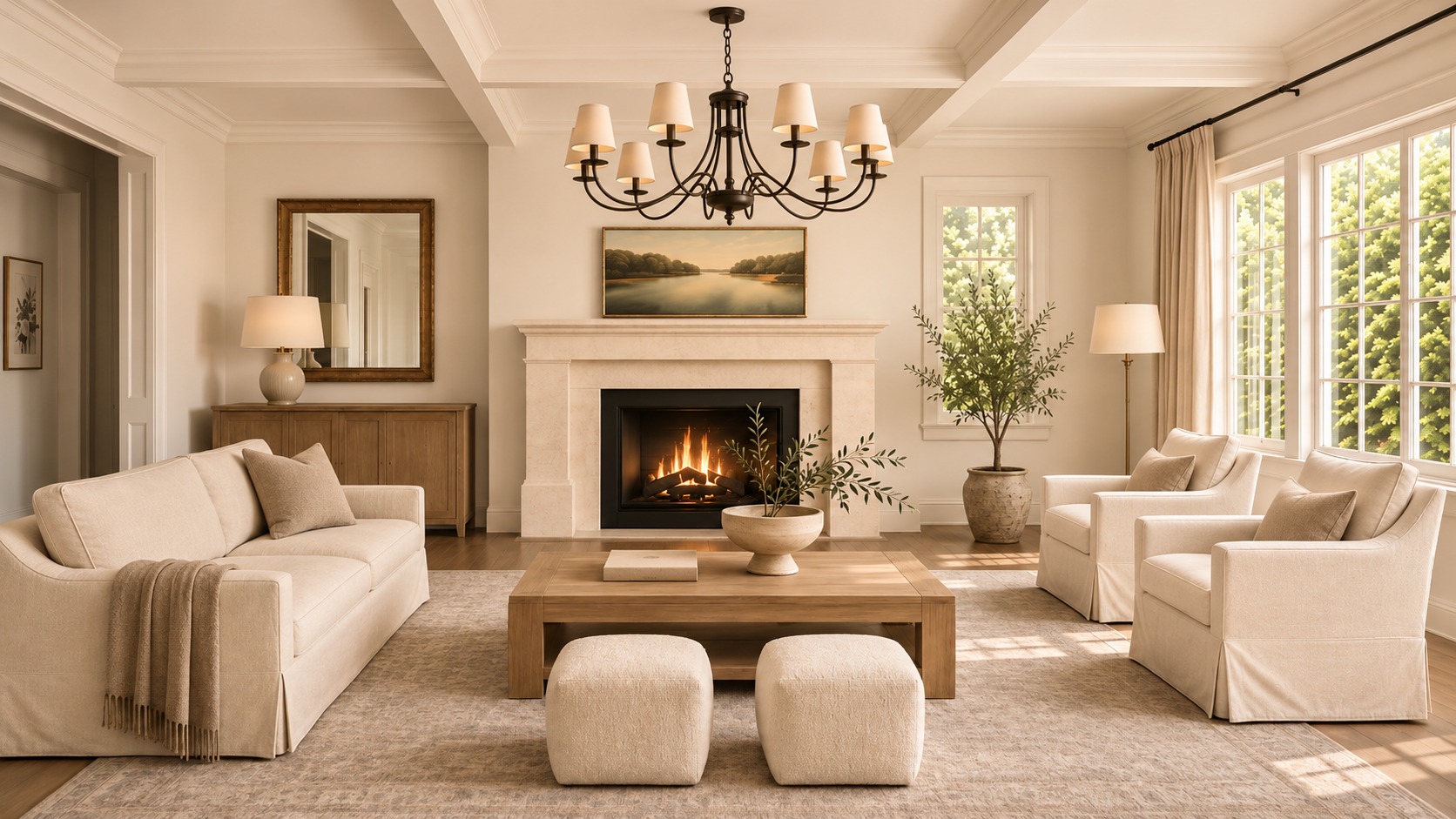
A living room can be perfectly bright and still feel uncomfortable.
The ceiling light is switched on. Every corner is visible. The furniture, walls and floor are evenly illuminated. Yet reading on the sofa requires more effort than expected, the television reflects an overhead fitting, and the room feels strangely flat after sunset.
Nothing appears obviously wrong with the brightness.
The problem is that light is being treated as a single requirement, when a home asks it to perform several different jobs.
A kitchen needs clear illumination where food is prepared. A living room needs comfortable light for conversation, reading and relaxation. A bedroom may require useful wardrobe lighting in the morning and a much gentler atmosphere before sleep.
These activities rarely benefit from exactly the same lighting arrangement.
This is the principle behind layered lighting: combining different sources and distributions of light so that a room supports the people using it, rather than expecting one fitting to do everything.
Understanding this principle is useful whether you're planning an electrical renovation, improving an existing room or simply trying to understand why a beautifully furnished home never feels quite right at night.
A Bright Room Is Not Always a Comfortable Room
Brightness is one of the most noticeable qualities of lighting, but it is not the only one that matters.
Two rooms can contain light sources with similar total lumen output and still feel completely different.
In one, light may be spread broadly from a central ceiling fitting. In another, softer background illumination may be combined with a reading lamp and a carefully directed wall light.
The total amount of light is only part of the experience.
Where the light arrives, the size and brightness of the visible source, the surfaces it strikes and the visual activity being performed all influence comfort.
Consider a person reading beside a sofa.
A bright ceiling fitting may illuminate the entire room while leaving the page less comfortably lit than a small, well-positioned reading lamp.
Increasing the brightness of the ceiling fitting could make the page easier to see, but it may also make the whole room unnecessarily bright or introduce more glare.
A task light offers a different solution: put additional light where the task takes place.
This does not mean ceiling lighting is unimportant.
It means the room's general lighting should not be expected to solve every visual problem.
Light Has More Than One Purpose
Lighting designers commonly distinguish between ambient, task and accent lighting.
These are useful descriptions of what light does, rather than rigid categories of products.
Ambient lighting provides a general level of illumination that helps people move through a room, recognise its boundaries and use the space comfortably.
Task lighting provides illumination for a particular activity, such as preparing food, reading, working at a desk or grooming at a bathroom mirror.
Accent lighting draws attention to architectural features, artwork, surfaces or objects, helping create emphasis and visual depth.
A single fitting may contribute to more than one purpose.
A pendant over a dining table, for example, can illuminate the tabletop while also becoming a visual feature.
A wall light may provide background illumination and highlight the texture of the wall behind it.
The value of layered lighting comes from understanding the purpose of each source within the complete arrangement.
The Difference Between Lighting a Room and Lighting an Activity
A room is defined by its walls, floor and ceiling.
But the activities inside it are defined by people, furniture and movement.
These are not always aligned.
A ceiling fitting may sit at the geometric centre of the room, while the person who needs light spends most of their time near a window, at a desk or in an armchair.
This difference is easy to overlook when lighting positions are planned from an empty floor plan.
The Furniture Plan Should Inform the Lighting Plan
Imagine a living room where the sofa is placed against one wall and a reading chair stands in the opposite corner.
A central ceiling fitting may provide adequate background light.
But the reading chair needs a more specific arrangement.
A floor lamp, adjustable wall light or table lamp may provide better illumination for reading, depending on how the person sits and where the light source is positioned.
The light should reach the reading material without shining uncomfortably into the person's eyes.
Likewise, a desk near a window may benefit from daylight during the day but still require a suitable task light in the evening.
The best starting point is often not, “Where should the lights go?”
It is, “What will people actually be doing here?”
That question changes how the room is planned.
A Home Needs Different Light at Different Times
Daylight introduces variation that artificial lighting does not need to reproduce exactly.
A living room may receive gentle morning light and strong afternoon sun. A kitchen may be well lit through a window at lunchtime but require substantial task illumination on a winter evening.
The same room can therefore have different lighting needs throughout the day.
A useful artificial lighting scheme complements these changes.
During daylight hours, only certain task areas may require additional illumination.
In the evening, ambient lighting may establish a comfortable base, with task lighting switched on when needed.
Late at night, a lower level of carefully positioned light may help people move through the home without returning every room to full brightness.
The important principle is flexibility.
When Daylight Becomes Part of the Architecture
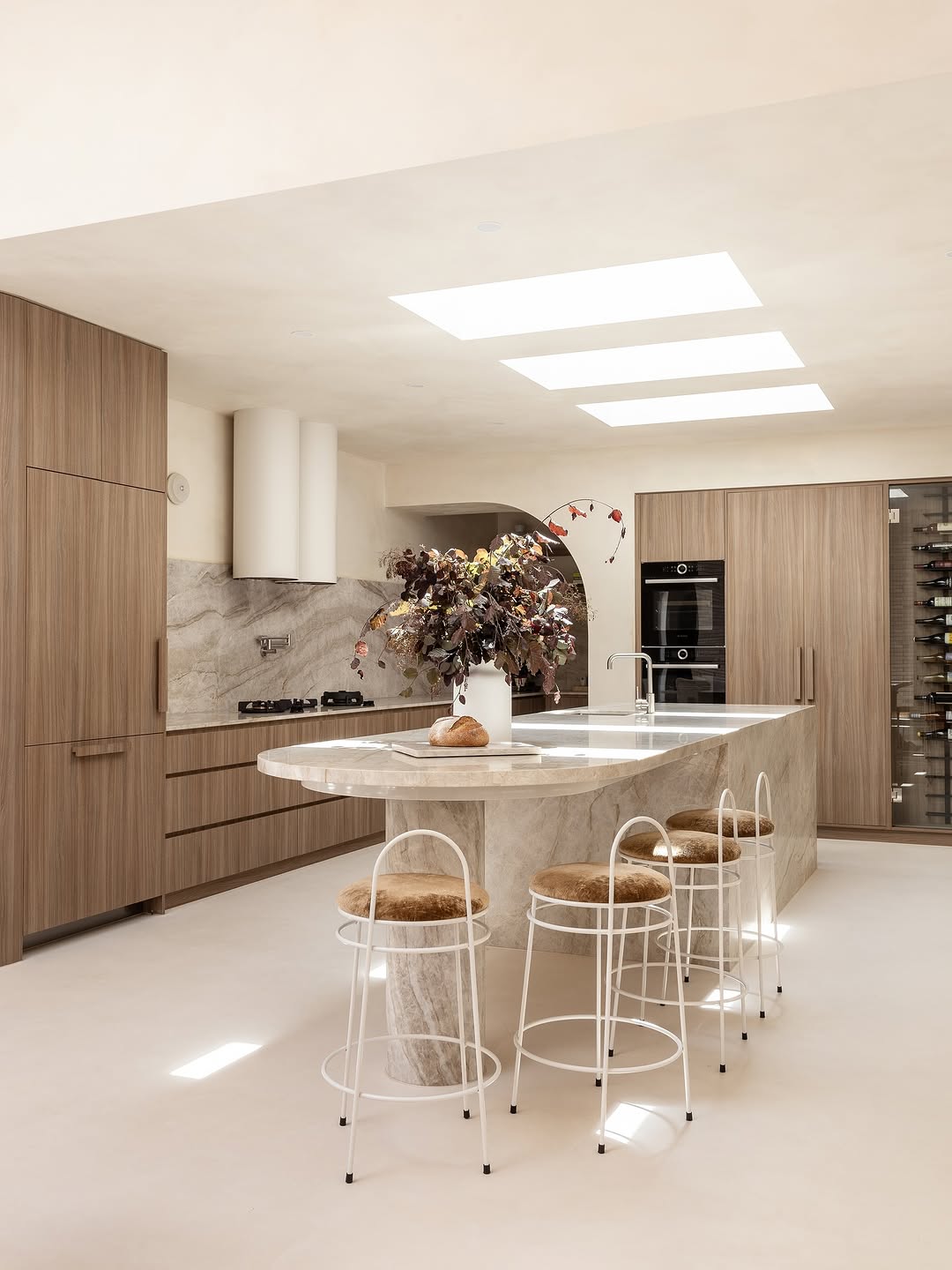
In the kitchen illustrated here, three overhead skylights introduce daylight across a large central island and the surrounding cabinetry.
The light does more than illuminate the room. It emphasises the geometry of the ceiling openings, creates distinct areas of brightness and changes how the stone and timber surfaces are perceived.
This is an important distinction in residential lighting design: daylight can contribute to both visibility and architectural expression.
However, a room designed around strong natural light must also be considered under very different conditions.
On an overcast afternoon, the contribution from the skylights may be substantially reduced. After sunset, the same worktop will depend on artificial illumination.
A successful lighting plan should therefore consider how the kitchen functions when the daylight that makes it visually appealing is no longer available.
The question is not whether artificial lighting can reproduce the appearance of sunlight. It is whether the work surfaces, circulation routes and other important areas remain comfortably usable as natural light changes.
More Light Is Not Always the Better Response
When a room feels uncomfortable, the instinct is often to install a brighter lamp.
Sometimes this is appropriate.
But if the problem is glare, poor direction or uneven illumination, increasing output may simply make the problem more obvious.
A brighter downlight reflected in a television screen can become more distracting.
A stronger lamp aimed directly towards a seated person may increase discomfort.
A more effective response may involve redirecting the light, changing the fitting, adding illumination closer to the activity or separating the lighting controls.
This is why lighting quality should be considered alongside light quantity.
The Living Room: One Space, Several Different Experiences
A living room is a particularly useful place to understand layered lighting because its activities are varied.
People may read, watch television, talk, work occasionally or simply relax.
A single lighting scene is unlikely to serve all those activities equally well.
Consider a hypothetical living room with a sofa, a reading chair, a television, a low cabinet and a textured feature wall.
The layout remains the same throughout the day.
Only the lighting arrangement changes.
Conversation and Everyday Living
When several people are using the room together, soft general illumination helps create a comfortable shared environment.
Indirect or broadly distributed light can reduce the dominance of one bright source.
A restrained accent light may introduce depth to a wall or architectural feature.
The room should feel welcoming without requiring every lamp to operate at maximum output.
Reading Beside the Sofa
Reading introduces a more localised visual demand.
A dedicated lamp can illuminate the book or reading material while allowing the surrounding room to remain at a lower brightness.
Its position matters.
If the light is poorly aimed, it may create an uncomfortable reflection or place the reader's own head or hand in the light path.
The right arrangement depends on the lamp, the furniture and the user's preferred posture.
Watching Television
Television viewing introduces another problem: the relationship between the screen and nearby light sources.
A visible ceiling light or bright window can create distracting reflections, depending on the screen finish and viewing angle.
Turning every light off is not necessarily the most comfortable solution.
A modest amount of well-positioned ambient illumination can help keep the surrounding environment visible while avoiding strong light reflected in the screen.
The lighting scheme should be checked from the actual seating positions.
A fitting that causes no obvious problem from the doorway may be distracting when viewed from the sofa.
What the Comparison Reveals
The furniture, floor plan and decorative materials did not need to change.
What changed was the relationship between light and activity.
For conversation, the lighting supports the entire shared space.
For reading, it focuses more strongly on a particular working area.
For television, it manages background illumination and reflections.
This is the practical benefit of layering: one room can respond to different activities without requiring one light source to be perfect for everything.
Kitchens Need Light Where the Work Happens
Kitchens illustrate another common lighting problem.
A room may have bright ceiling downlights and decorative pendants above the island, yet the main preparation surfaces remain partly shadowed.
This often occurs when general lighting is planned without considering the position of cabinets, benchtops and the person preparing food.
A ceiling light behind someone standing at the counter can allow their body to cast a shadow over the work area.
The fitting may be powerful, but the illumination arrives from the wrong direction.
Under-Cabinet Lighting Can Solve a Specific Problem
Lighting installed beneath upper cabinets can illuminate the benchtop more directly.
It can provide useful task lighting where food is prepared, particularly when overhead cabinets obstruct light from ceiling fittings.
However, placement and diffusion matter.
A poorly positioned LED strip may produce visible reflections on a polished benchtop or create bright individual points of light.
The result should be assessed for both useful illumination and visual comfort.
Pendants Are Not Automatically Task Lights
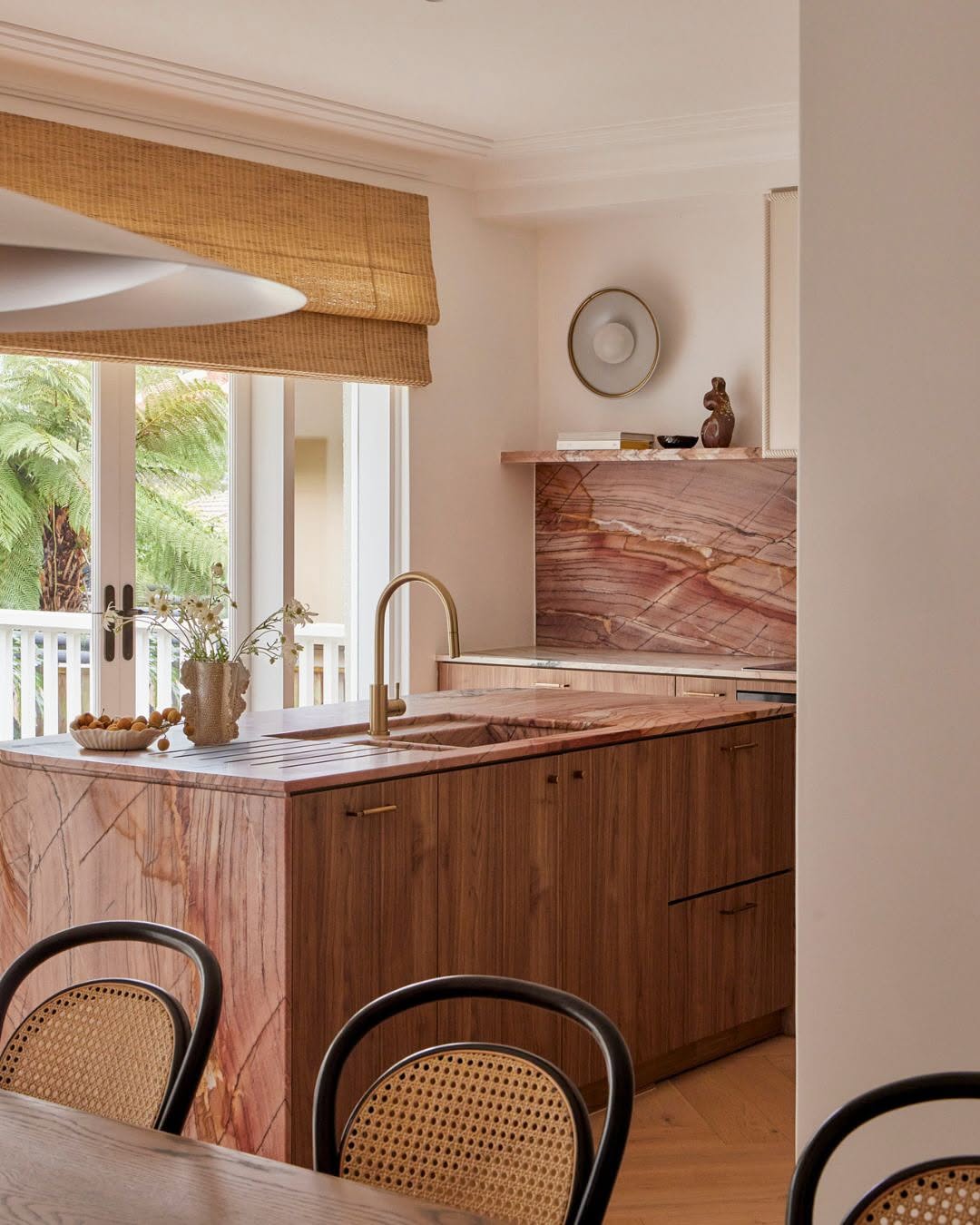
Pendant lights above a kitchen island are often selected for their appearance.
But a pendant's ability to illuminate the working surface depends on its light distribution, installation position and construction.
A decorative pendant may direct light mainly sideways or upwards.
Another may create a strong pool of light directly below.
Two visually similar fittings can therefore perform differently.
The design should consider the actual work surface, the people using it and whether additional lighting is needed.
A kitchen lighting plan is successful when food preparation areas receive useful illumination without requiring the entire room to become excessively bright.
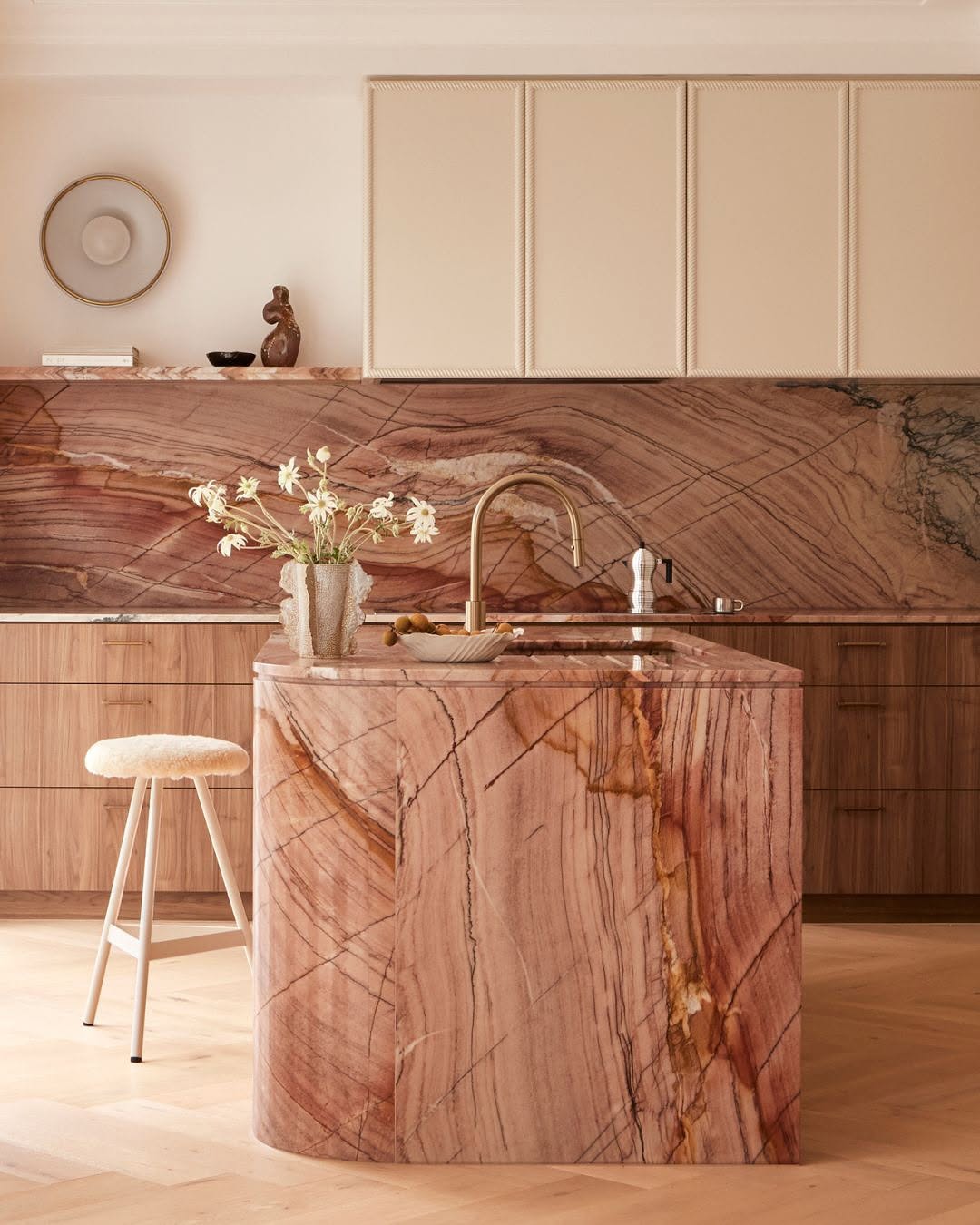
A Kitchen Island With Three Pendants: What Can We Actually Learn?
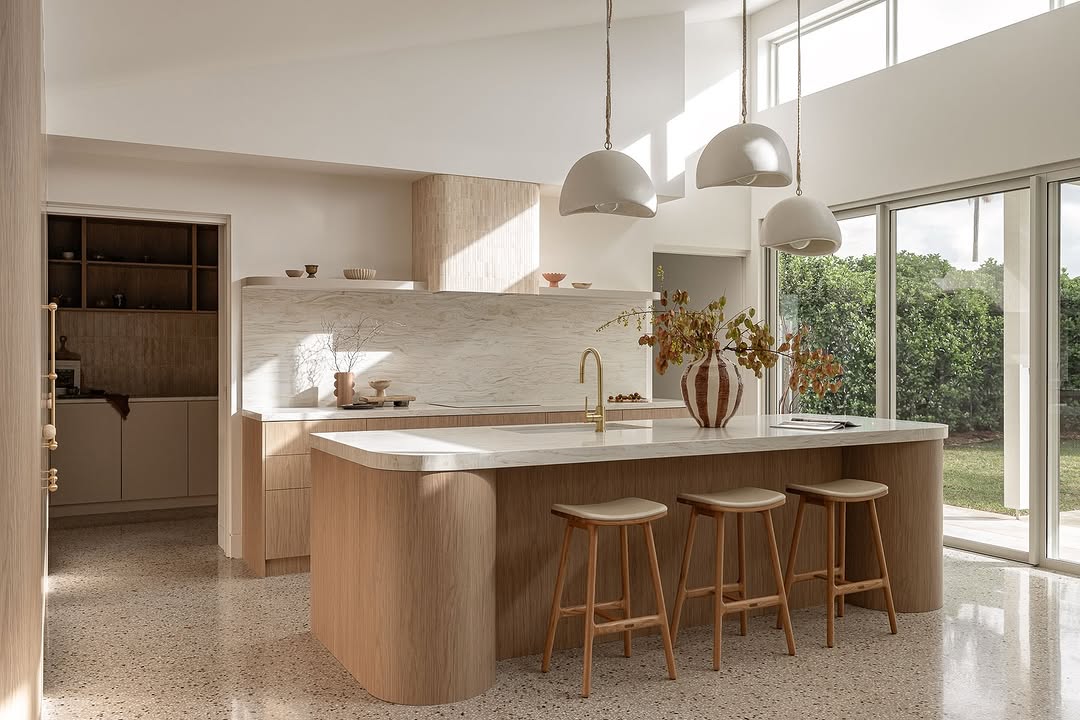
Three pendant lights are suspended in a row above the kitchen island shown here.
Their repetition reinforces the length of the island and creates a clear relationship between the lighting fixtures and the architecture.
From a design perspective, this alignment is successful in establishing visual rhythm.
But visual alignment is not the same as verified lighting performance.
To determine whether these pendants provide suitable task illumination, a designer would need to consider their light distribution, mounting height, output and the actual working areas of the island.
The photograph alone cannot establish these values.
This distinction matters because kitchen pendants are frequently selected and positioned as decorative objects before their practical contribution has been assessed.
A pendant arrangement should be considered alongside general lighting and any additional task lighting required by the kitchen layout.
The aim is not to maximise the number of fittings above the island. It is to make sure the intended activities receive useful illumination without unnecessary glare or visual clutter.
Dining Spaces: Light Creates a Sense of Place
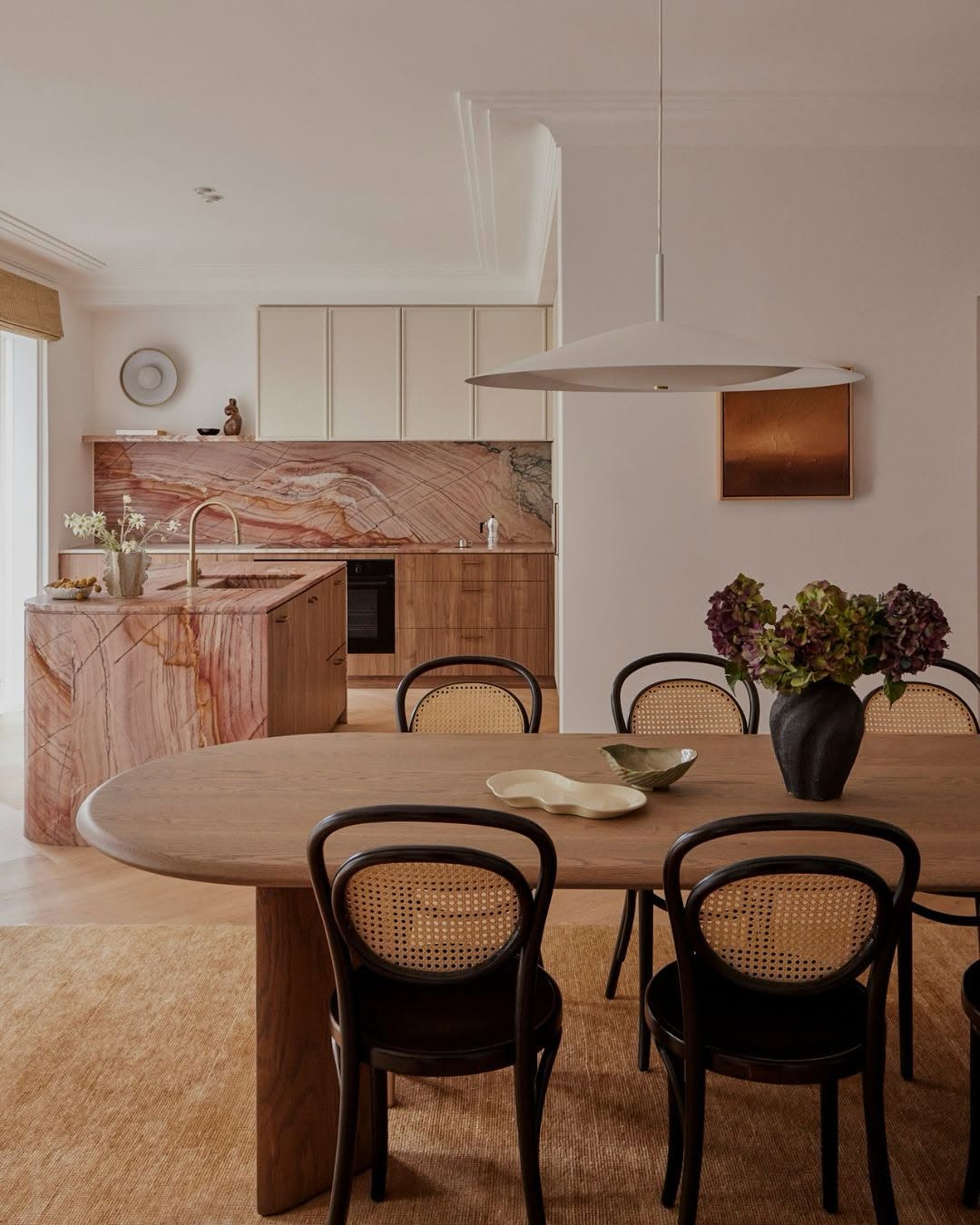
Dining room lighting is often centred on the table.
This can create a strong relationship between the furniture and the pendant above it.
But the composition must work from more than one viewpoint.
A fitting that looks well proportioned in a photograph may create glare when someone is seated, obscure sightlines across the table or provide insufficient useful light.
The height of a pendant should therefore be considered in relation to the table, ceiling, fitting dimensions and seated eye positions.
There is no single decorative hanging height that suits every room.
The quality of light matters too.
A softly distributed light across the dining surface can create a different experience from a narrow, intense beam concentrated on the centre of the table.
The surrounding room may benefit from a quieter ambient layer so that the dining table becomes a focal point without appearing isolated in darkness.
This is another example of lighting creating visual hierarchy.
The table can become important without every other surface competing for attention.
Bedrooms Benefit From Lighting That Respects Routine
Bedrooms have relatively simple functional requirements compared with kitchens, but the emotional and practical expectations can vary widely.
Someone may need strong enough light to find clothing in a wardrobe, comfortable bedside illumination for reading and a softer environment before sleep.
A single bright ceiling fitting is unlikely to provide the same quality for each activity.
Bedside Lighting Should Work With the Bed
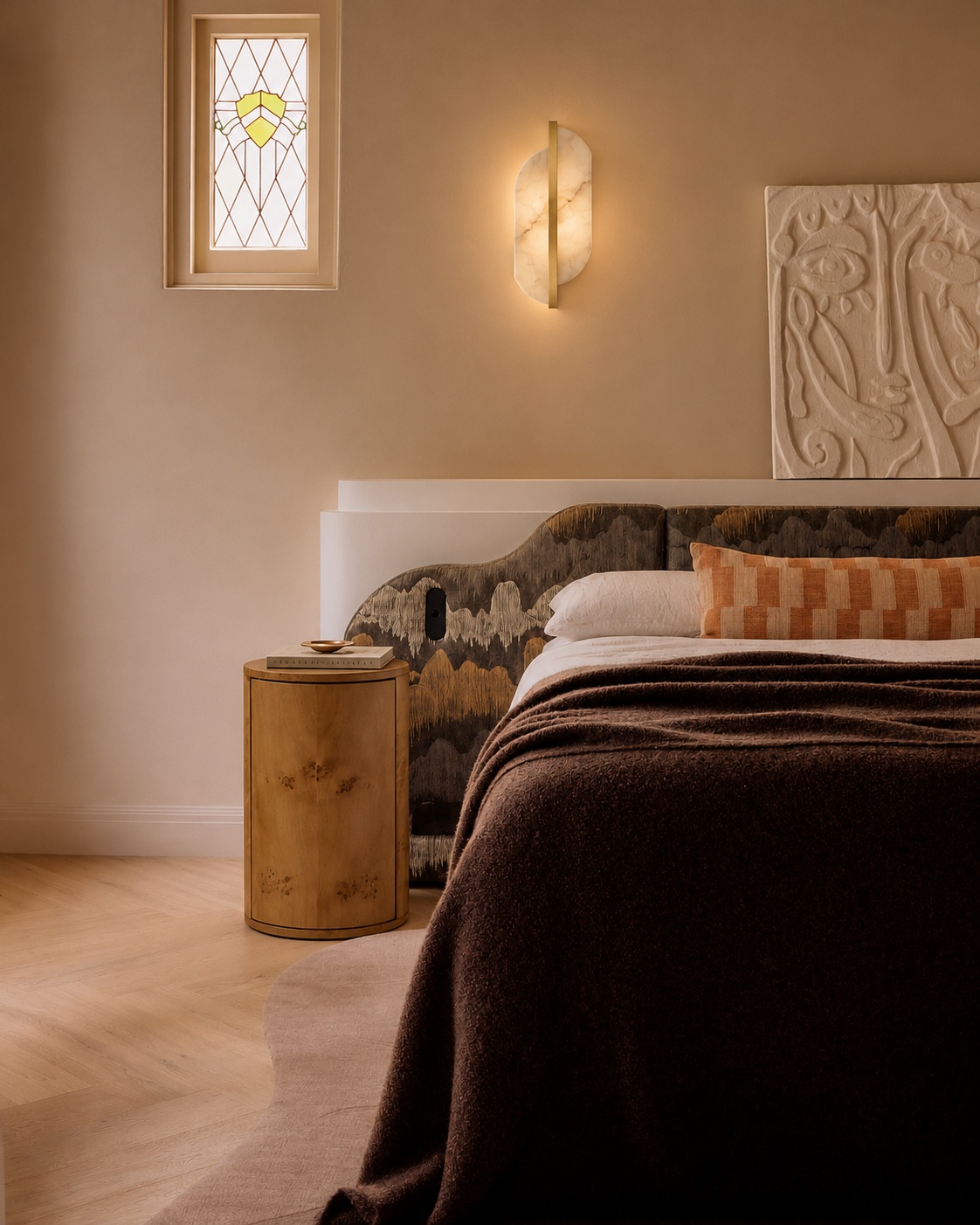
A bedside lamp is not useful merely because it looks attractive on the table.
Its height, shade, beam distribution and position relative to the reader affect how well it works.
A wall-mounted reading light may provide a more directed solution, especially where bedside tables are small.
But adjustable fittings should be checked from the normal sleeping and reading positions so that the light does not shine directly into a partner's eyes.
Wardrobes Need Their Own Consideration
Wardrobe interiors can be surprisingly difficult to see when ceiling lighting is behind the person standing in front of them.
Carefully designed integrated lighting or a suitably positioned room light can improve visibility.
Any built-in electrical arrangement needs appropriate planning, installation and future service access.
Night-Time Movement
The lighting used when getting ready in the morning may be unnecessarily bright for moving through the room late at night.
Where appropriate, a lower-output lighting option can make the room more flexible.
The objective is not to create a different lighting product for every moment.
It is to provide a manageable set of lighting options that support the room's real use.
Bathroom Mirrors Reveal Why Light Direction Matters
A bathroom can appear well illuminated while the person standing at the basin remains poorly lit.
This often happens when lighting is assessed by the overall brightness of the room rather than by the visual task taking place at the mirror.
A ceiling downlight may illuminate the basin and countertop while producing shadows beneath the user's eyebrows, nose and chin.
A wall-mounted light beside the mirror can contribute illumination from a different direction.
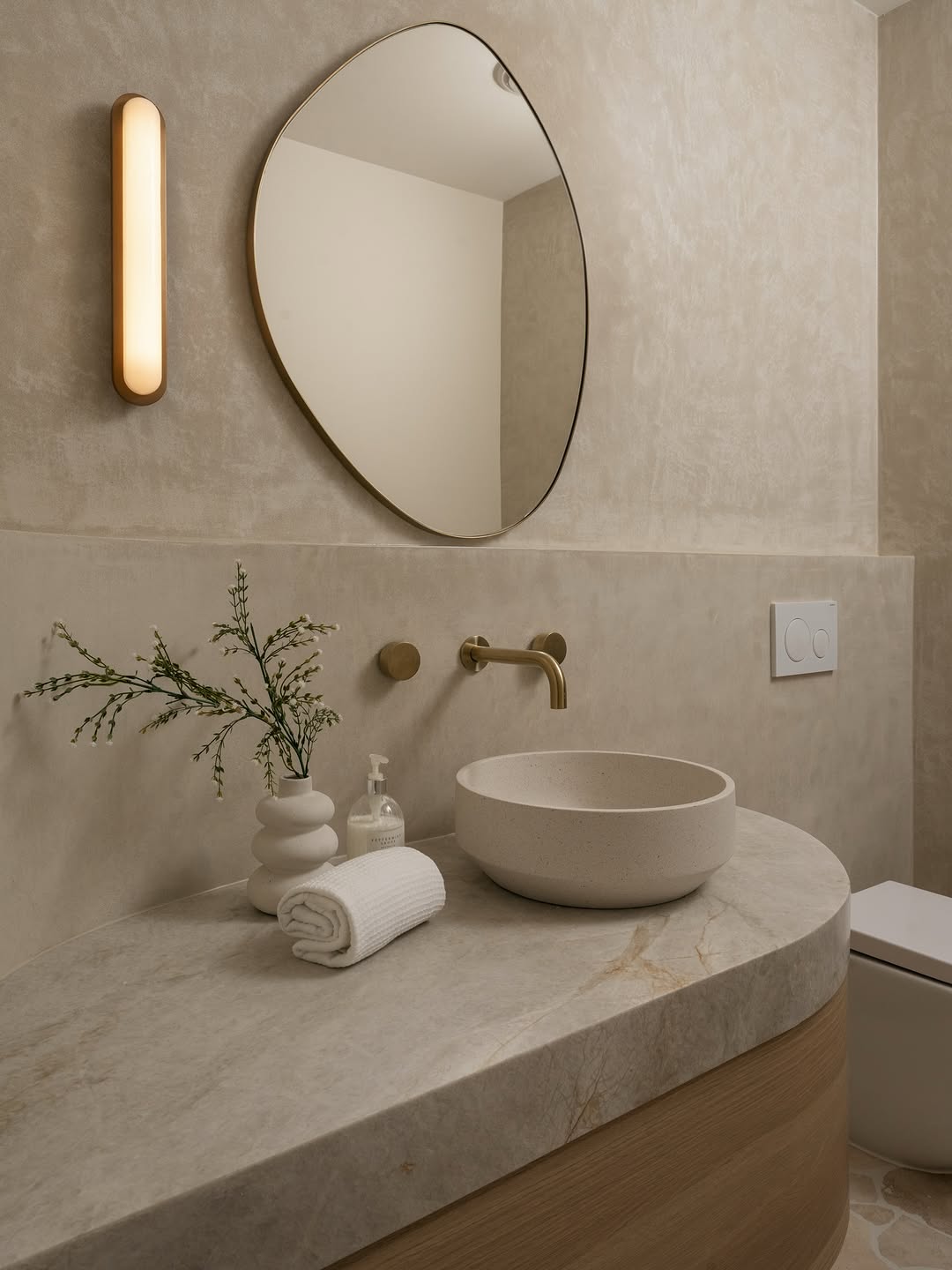
The bathroom illustrated here includes a vertical wall light positioned beside an irregularly shaped mirror.
The arrangement demonstrates how lighting can be integrated into the architectural composition of the vanity area.
What This Arrangement Demonstrates
The vertical wall sconce creates a visible source of light beside the mirror, while the warm finish complements the stone vanity and brass tapware.
However, the fitting is positioned on only one side of the mirror. Although it can contribute useful local illumination, it may also create uneven lighting across the user's face, depending on its output, direction and surrounding light.
A more balanced grooming-light arrangement may involve suitable illumination from both sides of the mirror or a well-designed front-facing light source.
This example illustrates why an attractive lighting composition and an effective task-lighting solution are not necessarily the same thing.
Lighting the User, Not Just the Mirror
A mirror reflects the person standing in front of it, but illuminating the mirror surface itself is not necessarily the same as providing useful light on the person's face.
For grooming activities, it is often more helpful to evaluate the direction and distribution of light arriving at the user.
Where a mirror cabinet is installed, its depth and door movement can also affect the available positions for adjacent wall lights.
In bathrooms, all electrical equipment and fittings must also be suitable for the intended installation location and comply with applicable electrical safety requirements.
The broader principle applies throughout the home: effective task lighting is designed around the position and activity of the person using the space.
Glare: The Problem That Brightness Cannot Fix
Glare is one of the most important reasons a well-lit room can still feel uncomfortable.
It can occur when a bright source is directly visible or when light reflects from a surface into the user's field of view.
These experiences are often described as direct glare and reflected glare.
Direct Glare
A bright lamp, exposed LED strip or poorly shielded downlight may attract attention in an uncomfortable way.
The effect depends on the luminance of the source, its apparent size, its position and the surrounding visual conditions.
The problem is not simply that the fitting produces too many lumens.
A light source can be uncomfortable because a relatively small, bright emitting surface is visible from a normal viewing position.
Diffusers, shielding, positioning and appropriate light distribution can help manage this problem.
Reflected Glare
Reflections can be particularly noticeable on glossy benchtops, television screens, glass doors and polished surfaces.
The reflected light may interfere with the activity taking place.
This is why lighting should be tested from the user's position.
A light reflected in a television screen from the sofa is more relevant than how the television wall looks from the doorway.
A pendant reflected across a glossy kitchen worktop may be more distracting during food preparation than in a carefully composed photograph.
Materials Change the Lighting Experience
Matte and glossy finishes do not respond to light in the same way.
A textured wall may become more expressive when illuminated from an oblique angle.
A polished stone surface can produce a more concentrated highlight.
Timber grain may appear different under directional or diffuse light.
These interactions can create depth and atmosphere, but they may also introduce unwanted visual distraction.
Lighting and material selection should therefore be considered together.
How Surface Texture Changes the Experience of Light
Lighting does not exist independently of the materials it illuminates.
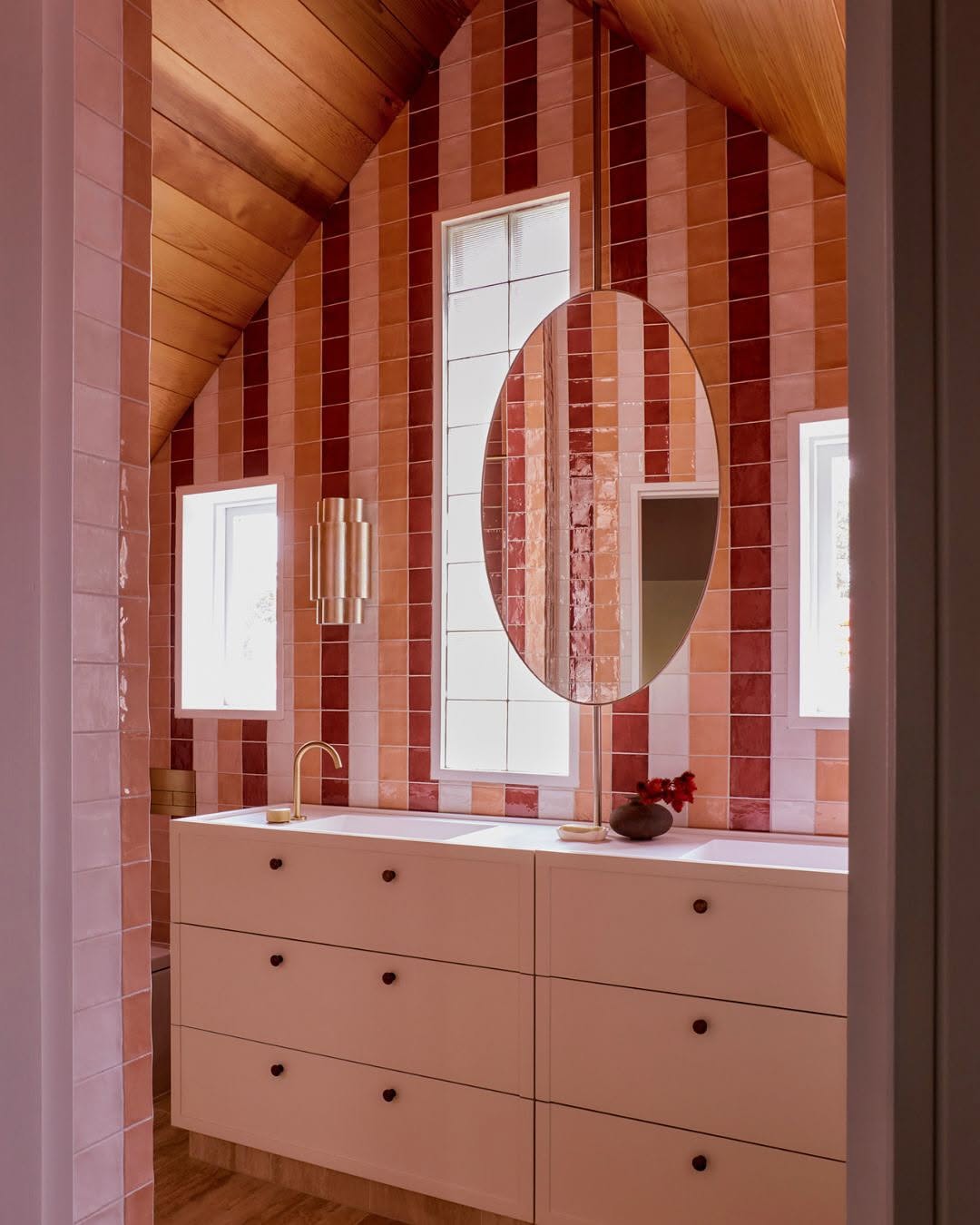
In the bathroom illustrated here, illuminated wall fittings sit against a vertically textured surface, while a strongly veined stone vanity introduces a different scale of pattern.
The composition reveals an important relationship between light and material.
The visible brightness of the wall fittings establishes local points of attention. The textured wall provides a more detailed architectural background, and the stone introduces broader changes in colour and pattern.
The result is not simply a combination of attractive finishes. It is a composition in which light sources and materials contribute different forms of visual information.
However, photographs do not reveal the complete lighting performance.
To understand how strongly a fitting emphasises texture, the direction and distribution of its emitted light would need to be considered.
A light directed obliquely across a relief surface may emphasise shadows and irregularities more strongly than broad, diffuse illumination.
This can be desirable when the texture is an intentional architectural feature.
It can also reveal surface imperfections that were less noticeable under other lighting conditions.
For this reason, material samples and intended lighting should be assessed together, especially where textured plaster, natural stone, timber grain or highly reflective finishes form an important part of the design.
Good lighting design should reveal the intended character of a material without allowing unwanted reflections or surface imperfections to dominate the space.
Colour Temperature, Lumens and Colour Rendering Are Different Things
Lighting specifications are often presented together, but they describe different characteristics.
Understanding the distinction helps avoid buying a fitting based on one attractive number.
Lumens Describe Light Output
Lumens describe the total amount of visible light emitted by a source.
They do not tell you how effectively that light reaches a particular work surface.
A fitting with a high lumen output may still provide poor task illumination if much of the light is directed away from where it is needed.
Lux describes illuminance — the amount of light arriving at a surface per unit area.
The distinction matters when assessing worktops, desks and other task areas.
A room's lighting performance cannot be judged from the lumen rating of a single lamp alone.
Kelvin Describes the Appearance of White Light
Correlated colour temperature, expressed in Kelvin (K), indicates whether a white light source appears relatively warm or cool.
Lower values, such as 2700K–3000K, generally produce a warmer appearance.
Around 3500K–4000K, light often appears more neutral.
Higher values, such as 5000K and above, appear cooler.
These categories describe appearance rather than brightness.
A cooler light is not automatically more powerful or more suitable for every task.
The appropriate colour temperature depends on the activity, surrounding finishes and desired atmosphere.
Colour Rendering Describes How Colours Appear
Colour rendering concerns how a light source affects the appearance of illuminated colours compared with a reference light.
The Colour Rendering Index, or CRI, is one commonly used metric.
A higher CRI can be useful when accurate colour appearance matters, but CRI is not a complete description of light quality.
Two light sources with similar CRI values can still produce different colour experiences.
Colour rendering should be considered alongside the light's spectrum, colour temperature, distribution and intended use.
The practical lesson is simple: no single specification tells you whether a fitting will feel comfortable in a finished room.
Lighting Controls Are Part of the Design
A thoughtful lighting scheme can become frustrating if the controls are poorly planned.
Imagine a living room with a ceiling fitting, wall lights and a reading lamp, all connected so that they can only operate together.
The room technically contains several layers, but it cannot use them flexibly.
Separating appropriate lighting groups can allow each source to perform its intended function.
Think in Activities, Not Only Circuits
A useful control plan considers how people move through the home and what they do in each space.
In a living room, the most useful arrangements might support general use, reading and lower-level evening illumination.
In a kitchen, worktop lighting may need to operate independently of decorative pendants.
In a bedroom, bedside lighting should be easy to control from the bed.
This does not require an elaborate smart-home system.
Simple, clearly organised controls can be effective.
Dimming Requires Compatibility
Not every LED fitting is dimmable, and not every dimmer works with every LED driver.
Poor compatibility can contribute to flicker, unstable operation or a limited dimming range.
Before specifying dimming equipment, confirm that the fitting, driver and control system are suitable for one another.
The same principle applies to colour-adjustable products and smart controls.
A feature described on a product listing is only useful if the complete system supports it.
Consider Maintenance From the Beginning
Lighting products may eventually require replacement or servicing.
LED drivers, controls and other components should not be placed where they become unnecessarily difficult to access.
The most visually minimal installation is not always the most maintainable one.
A successful design considers both the initial appearance and the practical realities of ownership.
Planning Lighting Before a Renovation
An electrical renovation is an opportunity to coordinate lighting with the furniture layout and intended use of each room.
Before electrical points are finalised, consider the positions of major furniture, work surfaces, cabinetry and architectural features.
Then review which activities need general illumination and which need dedicated task lighting.
Potential glare should be checked from normal seating and working positions.
Switching locations should reflect how people enter, leave and move through the space.
Why a Reflected Ceiling Plan Is Not Enough
A reflected ceiling plan can show where ceiling fittings will be positioned.
But it may not explain how a floor lamp, wall light or illuminated cabinet interacts with the people using the room.
Plans and elevations become more valuable when they include furniture, working surfaces and relevant viewing positions.
A simple lighting concept should therefore be reviewed alongside the furniture plan and important wall elevations.
For complex rooms, a lighting designer may also use photometric information or modelling to evaluate distribution and expected performance.
Concept images can communicate atmosphere, but they should not be mistaken for measured lighting calculations.
Electrical Safety and Professional Coordination
Electrical installations must comply with the requirements applicable to their location.
In New Zealand, prescribed electrical work is regulated, with limited circumstances in which qualifying homeowner-occupiers may carry out certain work themselves.
WorkSafe recommends using a licensed electrical worker where there is uncertainty about the skills and legal requirements involved.
For renovations, the relevant electrical professional should confirm the installation method, protection arrangements and compliance requirements.
This matters particularly around wet areas, exterior locations, concealed wiring and integrated lighting systems.
The same underlying principle applies elsewhere: lighting design and electrical installation are connected, but they are not the same professional task.
A design idea must be translated into a safe and appropriate installation.
The Home Lighting Review
A useful lighting assessment begins with observation, not a shopping list.
Rather than counting the fittings in each room, examine how the existing light responds to the people, activities and surfaces within it.
The following framework can be used when reviewing a finished room or discussing a future lighting plan.
Design dimension | What to observe | A question worth asking |
|---|---|---|
Activities | Reading, working, cooking, conversation and relaxation | Does each important activity receive useful light? |
Light direction | Where light arrives relative to the user and work surface | Is the light positioned for the task? |
Visual comfort | Visible bright sources and reflections | Is glare affecting normal viewing positions? |
Lighting balance | General illumination, local task light and visual emphasis | Can the room support different activities without unnecessary brightness? |
Materials | Reflective, matte and textured surfaces | How do the finishes change the distribution and experience of light? |
Controls | Switching, dimming and everyday access | Can occupants choose an appropriate lighting arrangement easily? |
Maintenance | Fittings, drivers and control components | Can the system be serviced without unnecessary disruption? |
This is an editorial assessment framework, not a substitute for a professional lighting calculation or electrical design.
Its purpose is to identify questions that are easy to miss when lighting is selected mainly by appearance.
A Home That Works After the Photograph
The most persuasive interior photographs often capture a single moment.
A pendant glows above a dining table. A wall light washes across stone. A reading lamp adds a warm pool of light beside an armchair.
These scenes can be beautiful.
But a home must work beyond that moment.
The same room should support an early morning, a busy afternoon and a quiet evening. It should allow people to read, prepare food, relax and move comfortably through the space.
This is why good lighting design is less about creating one perfect image and more about providing several useful experiences.
A ceiling fitting can be an important part of that design.
It simply should not be asked to do everything alone.
When ambient, task and accent lighting are coordinated with the furniture, materials and daily routines of a home, the result is not necessarily more light.
It is light used with greater purpose.
And that is what makes a room genuinely comfortable to live in.