How to Prevent Mould on Bathroom Ceilings in New Zealand Homes
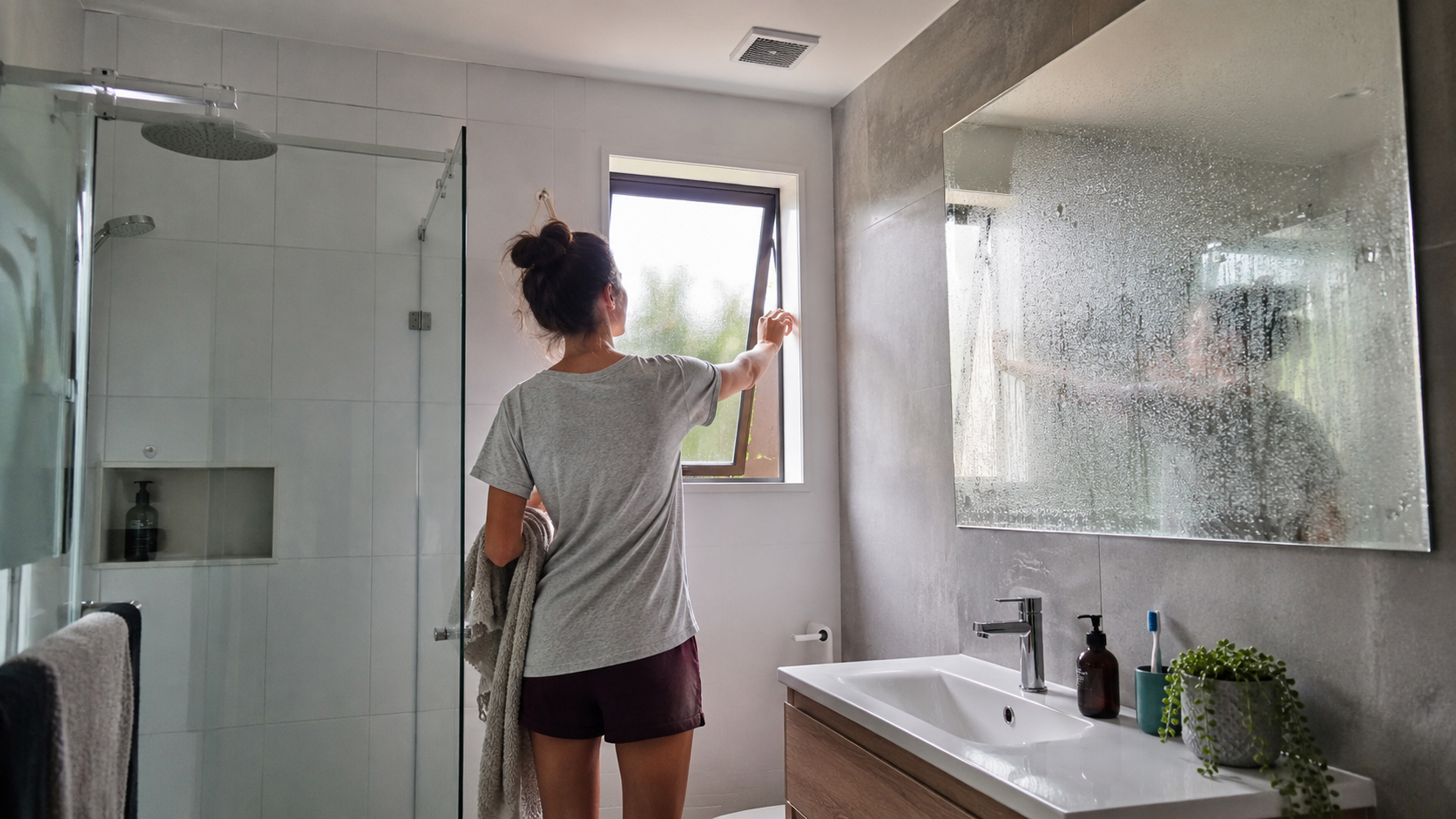
Bathroom ceiling mould is one of the most common moisture problems in New Zealand homes. It often starts as a few dark spots above the shower, then slowly spreads across the ceiling, into corners, or around the extractor fan.
For many homeowners and renters, the frustrating part is that cleaning it does not always solve the problem. The mould disappears for a few weeks, then comes back after another stretch of cold, damp weather.
This is a familiar issue in New Zealand DIY discussions. Reddit users often describe recurring bathroom ceiling mould, winter condensation, windows “crying” in the morning, and uncertainty about whether the real fix is better cleaning, better ventilation, better heating, insulation, or a full bathroom upgrade.
The short answer is: bathroom ceiling mould is usually a moisture-control problem, not just a cleaning problem. To stop it coming back, you need to reduce steam, remove damp air, warm cold surfaces, and choose bathroom materials that are easier to keep dry and clean.
Why NZ bathrooms get mouldy in winter
New Zealand bathrooms often struggle with moisture because shower steam meets cold surfaces. When warm, moist air touches a cold ceiling, mirror, window or tiled wall, it cools down and turns into condensation. If that moisture sits on the surface for long enough, mould can grow.
This is why mould often appears:
above the shower
in ceiling corners
around extractor fans
on window frames
behind blinds
on silicone joints
on painted bathroom ceilings
BRANZ identifies condensation on mirrors and tiles, mould on ceilings and walls, and a musty smell as common signs of internal moisture problems. It also notes that kitchen and bathroom renovations should include mechanical ventilation systems where practical.
The problem becomes worse in winter because homes are colder, windows are opened less, and damp air takes longer to dry out. BRANZ also links condensation and mould to moisture combined with low levels of heating in New Zealand homes.
Condensation mould vs leak-related mould
Before repainting or buying new products, it helps to work out what type of mould problem you have.
Condensation mould
This is the most common type on bathroom ceilings. It happens when steam and damp air repeatedly settle on cold surfaces.
Typical signs:
mould appears above or near the shower
spots are spread across the ceiling surface
mould is worse in winter
mirror and windows fog heavily
ceiling feels damp after showers
there is no obvious dripping or plumbing leak
Leak-related mould
This is more serious. It may mean water is entering from the roof, plumbing, shower wall, ceiling cavity, or pipework.
Warning signs:
brown staining
bubbling or peeling paint
soft plasterboard
sagging ceiling
mould in one concentrated patch
dampness even when the shower has not been used
musty smell that never clears
If the ceiling feels soft, stained or swollen, treat it as more than a surface mould issue. Cleaning or repainting may cover the problem temporarily while hidden moisture continues.
What to fix first: ventilation, moisture, then finishes
A good rule is:
Do not repaint first. Fix the moisture source first.
If you repaint a damp bathroom ceiling without improving ventilation or reducing condensation, the mould will probably return.
The New Zealand Building Code section E3 on internal moisture requires wet-area surfaces to be impervious, easily cleaned, and ventilated to support health and safety.
For everyday homeowners, that means a bathroom should not rely only on paint and cleaning. It needs a combination of:
steam control
effective extraction
adequate warmth
easy-clean surfaces
regular drying habits
Bathroom ventilation checklist
Ventilation is usually the first place to start.
1. Check whether your extractor fan vents outside
A bathroom fan should remove moist air from the room and discharge it outdoors, not into the ceiling cavity.
EECA recommends making sure kitchen and bathroom fans are big enough, regularly cleaned, and vented outside rather than into the ceiling space.
If your fan vents into the roof space, it can move the moisture problem somewhere else.
2. Run the fan long enough
Many bathrooms stay damp because the fan is turned off too soon. A good extractor fan may need to run during the shower and for a period afterwards.
A timer switch can help because it keeps the fan running after someone leaves the bathroom.
3. Clean the fan grille
Dust and lint reduce airflow. If the fan sounds like it is running but steam still lingers, check the grille and duct.
4. Open a window when practical
A window can help, especially after showering, but it should not be the only moisture strategy in a cold bathroom. In winter, opening windows may feel uncomfortable, so mechanical extraction becomes more important.
5. Keep the bathroom door managed
After a shower, leaving the bathroom door wide open can spread moist air into the rest of the home. In many cases, it is better to run the extractor fan first and ventilate the bathroom directly.
Shower habits that reduce moisture
Small habits can reduce how much moisture sits on the ceiling.
After showering:
run the extractor fan
use a squeegee on glass and tiles
wipe visible water from corners
keep towels spread out so they dry
avoid leaving wet bath mats bunched up
keep the shower door or screen positioned to allow airflow after use
EECA notes that reducing dampness is helped by improving airflow, using efficient heating, drying washing outside where possible, and using mechanical ventilation in bathrooms and kitchens.
A shower dome can also reduce steam escaping into the room, although it is not suitable for every bathroom style or shower setup.
Warmth matters too
Ventilation removes moisture, but temperature also matters. Cold surfaces attract condensation.
If your bathroom ceiling is very cold, steam will condense faster. This is why some homes keep getting mould even after cleaning.
BRANZ explains that condensation can be controlled through a combination of ventilation, heating and insulation, and that moisture in the air condenses when it meets cold surfaces.
Practical upgrades may include:
improving ceiling insulation where appropriate
using a suitable bathroom heater
keeping the home at healthier indoor temperatures
reducing draughts while still maintaining ventilation
checking whether the extractor fan is strong enough for the room size
This is especially important in older Auckland, Wellington, Christchurch and regional homes where insulation and ventilation may not match modern expectations.
Materials that are easier to keep clean
Mould prevention is not only about airflow. Surface choice also matters.
In bathrooms, choose finishes that are:
smooth
moisture-resistant
easy to wipe
suitable for wet areas
not overly porous
installed with correct sealing details
Good examples include:
large-format tiles in wet areas
frameless or semi-frameless shower screens that are easier to wipe
quality silicone in shower corners
easy-clean tapware finishes
vanities with moisture-resistant surfaces
LED mirrors with demister function
These products do not “solve” mould by themselves. But when combined with ventilation and good drying habits, they can make the bathroom easier to maintain.
Do demister mirrors help with mould?
A demister mirror does not remove moisture from the room. It warms the mirror surface so the mirror is less likely to fog.
That means it can improve daily comfort and reduce water sitting on the mirror surface, but it is not a replacement for an extractor fan.
A realistic way to explain it is:
Extractor fan = removes moist air
Demister mirror = keeps the mirror clearer
Heated towel rail = helps towels dry faster
Good surface materials = easier cleaning and less moisture retention
Together, these upgrades can make a bathroom feel warmer, drier and easier to use in winter.
Do heated towel rails help?
A heated towel rail will not fix ceiling mould on its own. But it can help reduce damp towels lingering in the bathroom.
Damp towels add moisture and can create a musty smell if they stay wet for too long. In winter, heated towel rails are useful because they support faster drying and improve everyday comfort.
They work best when paired with:
an extractor fan
enough space between towels
regular washing
a bathroom that is not constantly cold and damp
Should you repaint a mouldy bathroom ceiling?
Repainting can help only after the moisture issue is under control.
A better order is:
Identify whether the mould is caused by condensation or a leak.
Clean the mould safely.
Improve ventilation and drying.
Check ceiling condition.
Use a suitable bathroom paint system.
Maintain airflow after showers.
If you paint over mould without fixing moisture, the problem usually comes back.
For heavy mould, soft ceiling linings, ongoing leaks, or health concerns, use a qualified professional rather than treating it as a simple decorating job.
Bathroom mould prevention checklist
Use this quick checklist before spending money on a cosmetic fix.
Area to check | What to look for | Why it matters |
|---|---|---|
Extractor fan | Vented outside, clean, strong airflow | Removes moist air |
Ceiling | Cold, damp, stained or soft areas | Helps identify condensation vs leak |
Shower area | Water sitting on glass, tiles or silicone | Reduces ongoing dampness |
Mirror and windows | Heavy fogging or daily condensation | Shows moisture is lingering |
Towels and bath mats | Staying wet for hours | Adds moisture back into the room |
Heating | Bathroom feels cold after use | Cold surfaces increase condensation |
Paint and surfaces | Peeling, mouldy or hard to clean | May need better wet-area finishes |
When to call a professional
Get professional advice if:
the ceiling feels soft
paint is bubbling or sagging
mould returns very quickly after cleaning
there are brown stains
the extractor fan vents into the roof space
you suspect a roof or plumbing leak
mould is widespread or affecting health
you are renovating a wet area and need compliant installation
Bathroom moisture problems are not always visible at the surface. If water has entered ceiling linings, wall cavities or cabinetry, it is better to check early.
FAQ
Why does mould grow on my bathroom ceiling?
Usually because warm, moist shower air is condensing on a cold ceiling. If the room is poorly ventilated or cold, moisture sits on the surface long enough for mould to grow.
Is bathroom ceiling mould common in New Zealand?
Yes. Reddit discussions from New Zealand homeowners and renters often mention recurring ceiling mould, cold bathrooms, window condensation and poor ventilation, especially in winter.
Should I clean mould or improve ventilation first?
Clean visible mould safely, but do not stop there. If ventilation, heating and moisture control are not improved, the mould is likely to return.
Will an extractor fan stop bathroom mould?
A properly sized, clean fan that vents outside can make a major difference. But it should be part of a wider approach that includes warmth, drying habits and suitable bathroom surfaces.
Does opening a window work?
It can help, but in winter it may not be enough or may be uncomfortable. A bathroom extractor fan vented outside is usually more reliable for removing shower steam.
Do LED demister mirrors prevent mould?
No, not directly. A demister mirror helps keep the mirror clear, but it does not remove moist air from the bathroom. You still need ventilation.
Are heated towel rails worth it in winter?
They can be useful because they help towels dry faster and reduce damp towel smell. They work best alongside good ventilation.
Should I repaint my bathroom ceiling?
Only after you have dealt with the moisture cause. Use suitable bathroom paint, but do not rely on paint alone to solve mould.
Final thoughts
Bathroom ceiling mould is not just an aesthetic issue. It is a sign that moisture is staying in the room for too long.
For most New Zealand homes, the best long-term solution is not one single product. It is a system: extract moist air, warm cold surfaces, dry wet materials, and choose easy-clean bathroom finishes.
Start with the basics: check the extractor fan, reduce steam after showers, dry surfaces, and look for signs of hidden leaks. Then consider upgrades such as a better fan, demister mirror, heated towel rail, shower screen, or moisture-resistant finishes as part of a more comfortable and easier-to-maintain bathroom.
A bathroom that stays drier will not only look better. It will feel better to use every morning, especially through a New Zealand winter.