Single Bowl vs Double Bowl Kitchen Sink: What Works Best for NZ Homes?
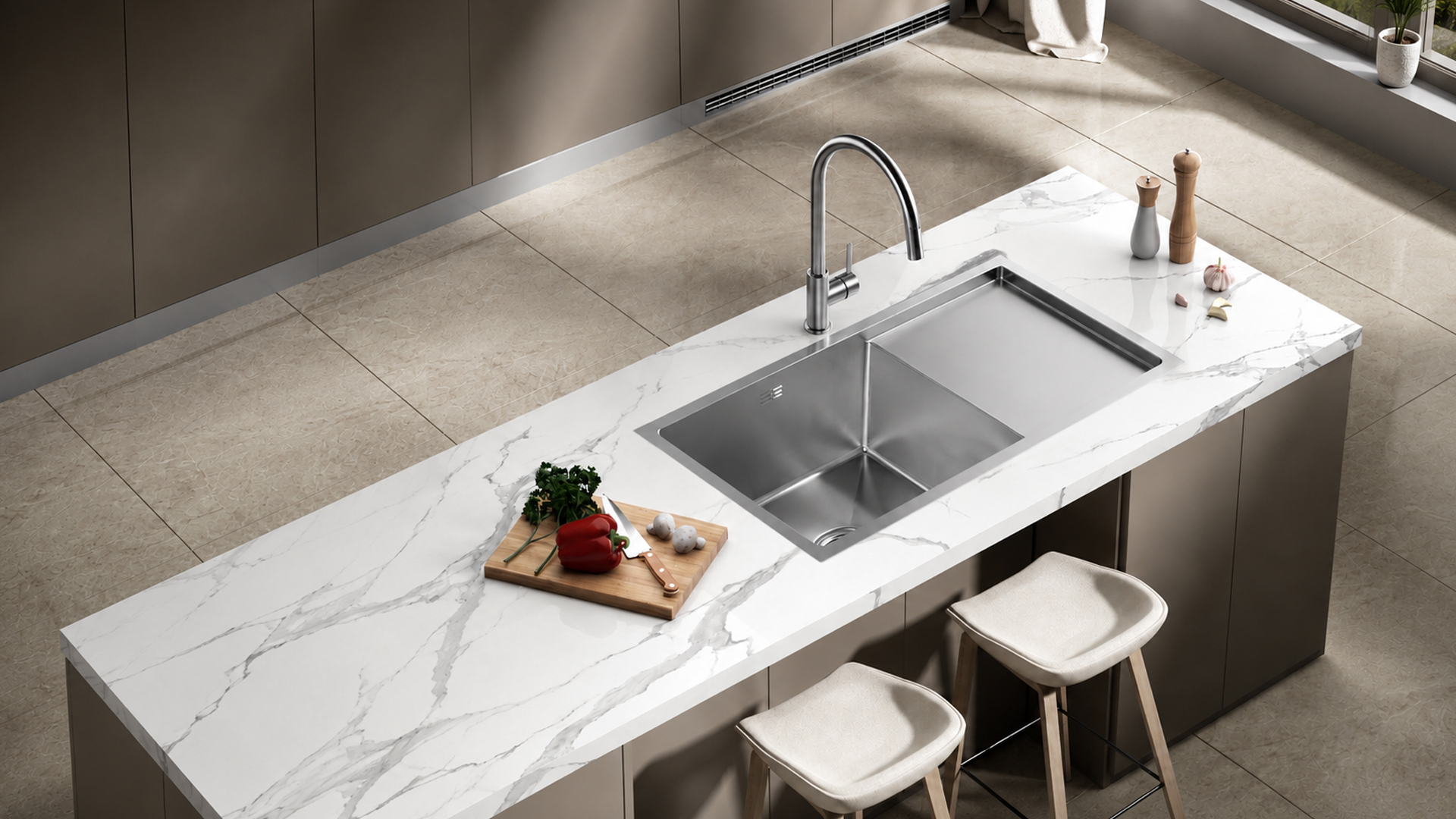
Choosing a kitchen sink sounds simple until you start comparing options. Single bowl or double bowl? Stainless steel or granite composite? Topmount or undermount? Drainboard or no drainboard? Then there is the tapware: standard mixer, swivel spout, pull-out spray, water pressure, warranty and product compliance.
This is exactly why kitchen sink and tapware questions come up so often in home improvement discussions. Homeowners are not just asking what looks good. They want to know what will actually work in a busy New Zealand kitchen.
For most NZ homes, the best sink choice depends on how you use the kitchen every day. A single bowl sink is usually better for large pots, roasting trays and compact kitchens. A double bowl sink is useful if you like separating washing, rinsing and food preparation. A drainboard can be valuable in laundry areas, rental homes and busy family kitchens where dishes, cloths and cleaning tools need somewhere to sit.
There is no one perfect sink for every home. The right choice is the sink that fits your bench, cabinet, tapware, cleaning habits and renovation budget.
Quick answer: single bowl or double bowl?
Sink type | Best for | Main advantage | Main trade-off |
|---|---|---|---|
Single bowl sink | Compact kitchens, large cookware, minimalist designs | More open space for pots, trays and cleaning | Less separation for washing and rinsing |
Double bowl sink | Family kitchens, multitasking, food prep | Separate zones for washing, rinsing and prep | Each bowl may feel smaller |
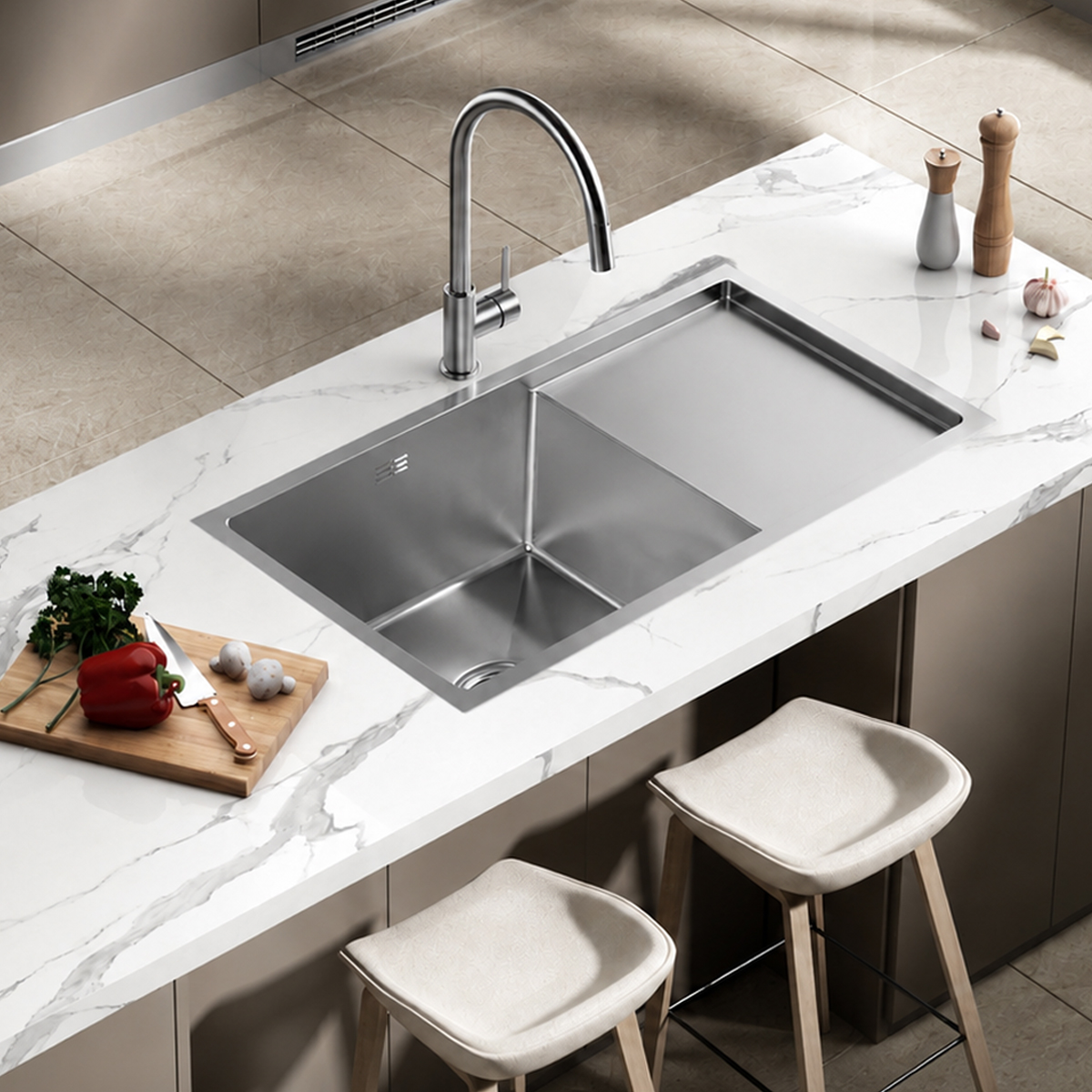
Single bowl with drainboard | Laundry areas, rental homes, daily washing | Extra drying and prep area | Uses more bench width |
Double bowl with drainboard | Busy kitchens and utility spaces | Maximum function | Needs more cabinet and bench space |
A single bowl is not “basic”, and a double bowl is not automatically “better”. The best option depends on the tasks you do most often.
When a single bowl sink works best
A single bowl sink is often the most practical choice for modern kitchens, especially where bench space is limited.
It works well if you often wash:
large pots
baking trays
chopping boards
air fryer baskets
oven racks
baby bath items
buckets or cleaning tools
large serving dishes
The main benefit is uninterrupted space. Instead of two smaller compartments, you get one larger bowl that can handle awkward items more easily.
A single bowl sink is especially useful in:
compact kitchens
apartments
kitchenettes
minimalist kitchens
laundry cabinets
sculleries
bar areas
rental properties
If your kitchen has a dishwasher, a single bowl may be enough for daily rinsing and occasional handwashing. Many households no longer need two sink bowls for every task because the dishwasher handles most dishes.
When a double bowl sink works best
A double bowl sink is useful when you want separation.
For example, you can:
wash dishes in one bowl and rinse in the other
soak cookware while still using the second bowl
wash vegetables separately from dirty dishes
separate food prep from cleaning
use one bowl for draining while the other stays free
This can be helpful in family kitchens, homes without a dishwasher, shared houses, or kitchens where several tasks happen at once.
The trade-off is bowl size. A double bowl sink may look generous overall, but each bowl can feel small if you regularly wash large pots and trays.
Before choosing a double bowl, check the actual bowl dimensions, not just the total sink size.
Is a drainboard worth it?
A drainboard is not always the most stylish feature, but it is very practical.
It is useful if:
you handwash dishes often
you need somewhere to place wet cups or pans
you use the sink for laundry tasks
you want to protect the benchtop from water
you have limited space for a separate drying rack
the home is a rental or high-use family property
A drainboard can be especially valuable in kitchen and laundry sink areas, where the sink is used for cleaning, rinsing, soaking and everyday household tasks.
The downside is that it takes more bench width. In a small designer kitchen, you may prefer a clean undermount sink with no visible drainboard. In a busy household, a drainboard may be the feature you appreciate most.
Topmount vs undermount sinks
Installation type affects both the look and the practicality of the sink.
Topmount sink
A topmount sink, also called an overmount or drop-in sink, sits into a cut-out in the benchtop, with the rim visible on top.
Topmount sinks are popular because they are generally easier to install and replace. They can suit a wider range of benchtop materials and are often a practical choice for renovations where you want to work with an existing bench cut-out.
Best for:
budget-conscious renovations
rental properties
laundry areas
laminate benchtops
easier future replacement
straightforward installation
Undermount sink
An undermount sink is installed beneath the benchtop, creating a cleaner, more seamless look. Bunnings NZ notes that undermount sinks sit slightly below the benchtop, making it easier to wipe water or food from the bench into the sink, but they are usually more suited to weight-bearing benchtops such as granite, marble or engineered stone.
Best for:
stone or engineered stone benchtops
modern kitchens
clean minimalist designs
easy bench wipe-down
higher-end renovation finishes
The key thing to remember is that undermount installation depends on the benchtop and cabinet structure. It is not just a style decision.
Stainless steel vs granite composite
The two most common sink material directions are stainless steel and granite composite.
Stainless steel sinks
Stainless steel is a classic kitchen sink material because it is practical, versatile and familiar.
It usually suits:
modern kitchens
rental properties
laundry spaces
sculleries
commercial-style kitchens
homes where durability and easy cleaning matter
Stainless steel pairs well with chrome, brushed nickel, gunmetal or matte black tapware.
The look can range from simple and affordable to premium handmade designs with tight corners, deeper bowls and thicker material.
Granite composite sinks
Granite composite sinks are chosen for colour, texture and a more designed look.
They suit:
modern kitchens
white or black kitchen schemes
stone-look benchtops
minimalist interiors
homes wanting a softer, less reflective finish
A white granite composite sink can brighten a kitchen or laundry area. A black granite composite sink can create contrast and feel more architectural.
The main thing is to match the sink with the benchtop, tapware finish and cleaning expectations. Lighter sinks can look fresh and premium, but the design should make the sink edge clear against the bench. Dark sinks need enough lighting so the shape and texture do not disappear.
What about tapware?
A sink should not be chosen separately from the tap.
Before buying, think about:
tap hole position
spout height
spout reach
swivel range
pull-out spray function
water pressure suitability
handle clearance
wall or window clearance
finish colour
warranty and parts availability
For larger single bowls, a pull-out kitchen mixer can be useful because it makes rinsing corners, trays and large pots easier.
For double bowls, a swivel mixer is important so the water can reach both bowls comfortably.
For laundry sinks, a taller spout or pull-out mixer can make it easier to fill buckets or rinse cleaning items.
In New Zealand, plumbing product compliance is also a real consideration. MBIE has published recognition notices confirming that selected plumbing and drainage products certified under the Australian WaterMark scheme meet specific clauses of the New Zealand Building Code, including a recognition pathway for tapware.
What to measure before buying a kitchen sink
Do not buy a sink based only on the product photo. Measure the space first.
What to measure | Why it matters |
|---|---|
Cabinet width | Confirms whether the sink bowl and clips/supports will fit |
Benchtop cut-out | Important for replacement sinks |
Bowl size | Determines whether pots and trays will fit |
Bowl depth | Affects splash, comfort and cabinet space below |
Tap hole position | Confirms mixer placement |
Waste position | Affects plumbing connection |
Drainboard direction | Left-hand or right-hand layout matters |
Window clearance | Tall mixers may hit windows or sills |
Dishwasher position | Affects workflow |
Under-bench storage | Deep bowls may reduce cabinet space |
For undermount sinks, remember that extra clearance may be needed below the benchtop for clips, supports and sealing. Reddit discussions about undermount sinks often focus on exactly this problem: the sink may physically fit the cut-out, but clips, tap position, cabinet sides and support details can complicate installation.
Which sink works best for small kitchens?
For many small kitchens, a single bowl sink is the smarter choice.
Why?
Because a compact kitchen usually benefits from one flexible bowl rather than two smaller bowls. If the household has a dishwasher, a single bowl can handle the remaining daily tasks without taking too much bench space.
Best small-kitchen options:
compact single bowl stainless sink
single bowl granite composite sink
single bowl with small drainboard
undermount single bowl for stone benchtops
topmount single bowl for easier replacement
A double bowl can still work in a small kitchen, but only if the cabinet and bench width allow it without sacrificing too much preparation space.
Which sink works best for busy family kitchens?
For a busy family kitchen, the best choice depends on dishwasher use.
If you use a dishwasher daily, a large single bowl may be ideal. It gives space to rinse plates, wash pans and clean large cookware.
If you handwash often, a double bowl may be better because it gives you separate washing and rinsing zones.
If the kitchen is used heavily throughout the day, a drainboard can be useful because it creates a dedicated wet zone rather than spreading water across the benchtop.
Best family-kitchen options:
large single bowl with drainboard
double bowl stainless sink
deep granite composite single bowl
double bowl with practical bowl proportions
Which sink works best for laundry areas?
Laundry sinks need to be practical.
They may be used for:
soaking clothes
rinsing shoes
filling buckets
cleaning brushes
washing pet items
rinsing paint tools
handwashing delicate fabrics
general household cleaning
For laundry areas, a deeper single bowl or single bowl with drainboard often makes sense. Stainless steel is a practical option because it suits utility spaces and daily cleaning tasks. Granite composite can work well if the laundry is designed to feel like an extension of the kitchen or bathroom.
A laundry tap should have enough height and reach. Pull-out or swivel mixers can be especially useful.
Common mistakes to avoid
Choosing a sink before checking the cabinet
The sink may look right online but still be too wide, too deep or difficult to support.
Forgetting the tap position
A sink and mixer need to work together. A large sink with a short spout can be annoying every day.
Choosing two bowls that are both too small
A double bowl is only useful if the bowls are big enough for your actual dishes and cookware.
Ignoring installation type
Topmount and undermount sinks have different benchtop and installation requirements.
Forgetting the drainboard direction
Left-hand and right-hand drainboards affect workflow. Choose based on where you prep, wash and stack dishes.
Buying only for looks
A sink is used every day. Style matters, but so do depth, cleaning, drainage, tap reach and cabinet fit.
Simple decision guide
Your situation | Best starting point |
|---|---|
Small kitchen with dishwasher | Large single bowl |
Small kitchen without dishwasher | Single bowl with drainboard or compact double bowl |
Family kitchen with lots of handwashing | Double bowl |
Laundry area | Deep single bowl or sink with drainboard |
Modern stone benchtop | Undermount sink |
Existing laminate benchtop | Topmount sink |
Large pots and baking trays | Large single bowl |
Food prep and rinsing at same time | Double bowl |
Rental or practical renovation | Stainless steel topmount |
Design-led kitchen upgrade | Granite composite or undermount stainless |
FAQ
Is a single bowl sink better than a double bowl sink?
A single bowl sink is better if you wash large cookware, have a compact kitchen, or use a dishwasher for most dishes. A double bowl is better if you want separate washing, rinsing and prep zones.
Is a double bowl sink worth it?
Yes, if you regularly handwash dishes or multitask at the sink. But each bowl may be smaller, so check the actual bowl dimensions before buying.
Is a drainboard old-fashioned?
Not necessarily. A drainboard is very practical in busy kitchens, laundry areas and rental properties. It gives wet items a dedicated place to sit and helps protect the benchtop.
Is topmount or undermount better?
Topmount is usually easier to install and replace. Undermount gives a cleaner look and makes bench wipe-down easier, but it needs a suitable benchtop and correct support.
Are granite composite sinks good for NZ kitchens?
Granite composite sinks can be a good choice for modern kitchens where colour and design matter. They work especially well in black, white or neutral kitchen schemes. As with any sink, check size, cleaning requirements and installation compatibility.
What tap should I choose with a large single bowl sink?
A pull-out or swivel kitchen mixer is usually practical because it helps rinse the full bowl, corners, large pots and trays.
What should I check before buying tapware in New Zealand?
Check size, spout reach, water pressure suitability, warranty, replacement parts, finish, installation requirements and product compliance. MBIE has recognised selected WaterMark-certified tapware under the Approved Products Certified Overseas pathway for relevant New Zealand Building Code clauses.
Can I install an undermount sink in any benchtop?
No. Undermount sinks are generally more suitable for strong benchtop materials such as engineered stone, granite or marble. They also require proper support, sealing and installation.
Final thoughts
The best kitchen sink for a New Zealand home is not simply the biggest, most expensive or most stylish option. It is the one that matches the way the household actually uses the kitchen.
Choose a single bowl sink if you want flexible space for large items, a cleaner look and better use of compact bench space. Choose a double bowl sink if you regularly wash, rinse and prepare food at the same time. Add a drainboard if your kitchen or laundry area needs a practical wet zone.
Then choose tapware that works with the sink, not against it. A good sink and mixer combination should make everyday cleaning easier, protect the surrounding bench, and fit the space properly from the beginning.